

Finding political news blogs that provide reliable social commentary, in-depth media literacy, and progressive reporting remains difficult. Many aggregators push ad-funded outlets that lack consistent editorial voices, community focus, or transparent funding models. This comparison lists sources so educators, activists, and community members can choose ones that match their expectations for opinion balance and independent funding.
Table of Contents
Whitebunnywabbit
At a Glance
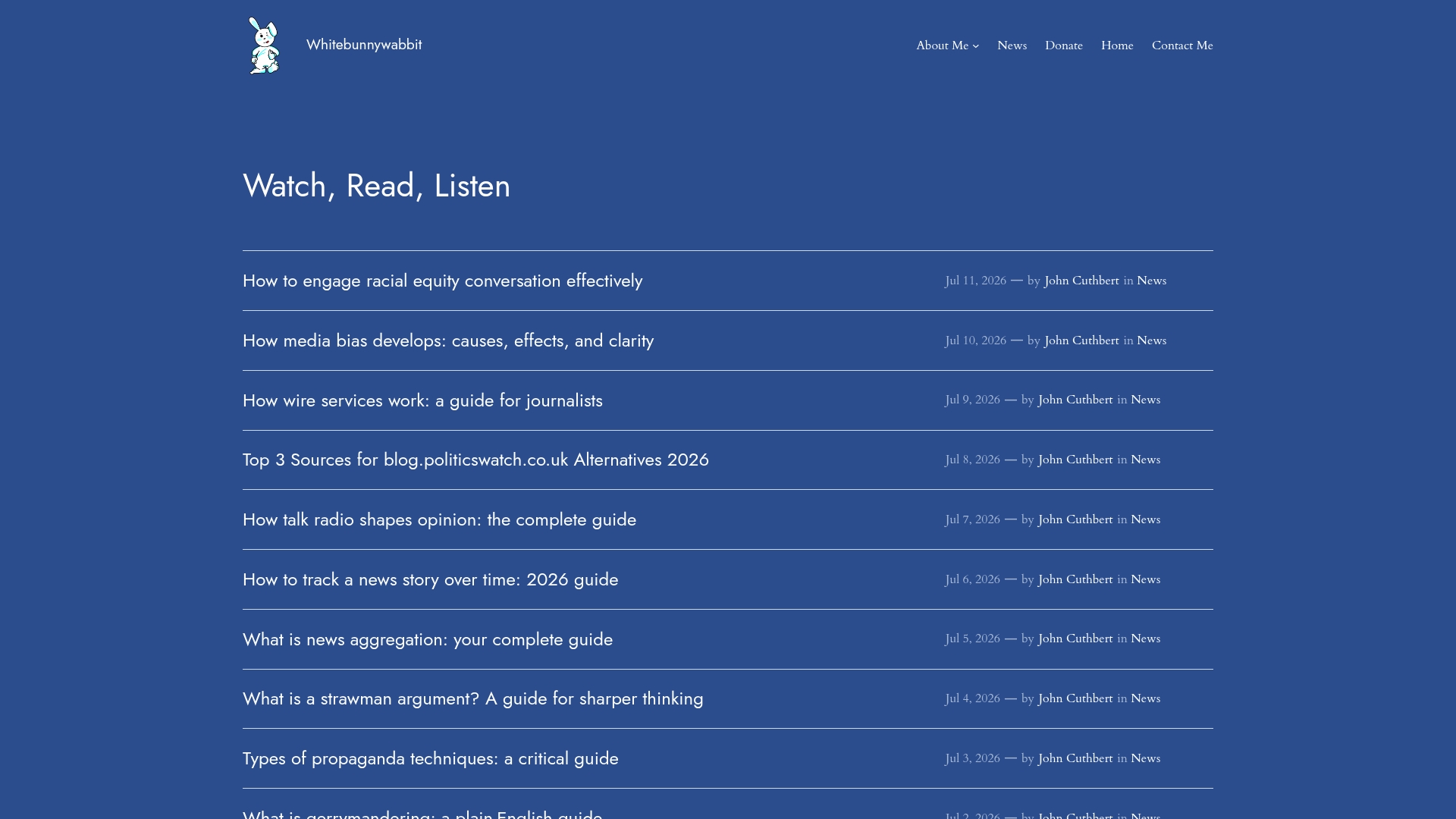
John Cuthbert writes the articles and guides that anchor this site. The site mixes news summaries, opinion pieces, and educational resources for media literacy. It runs on a WordPress powered setup and maintains a community and social media presence for reader engagement.
Core Features
The site publishes educational articles and news guides that explain media bias, propaganda, and journalistic techniques. It pairs practical guides for tracking news stories with opinion pieces that critique social and political topics. The platform supports community and social media engagement while using WordPress for flexible content management.
Key Differentiator
The clearest distinction is the site’s concentrated focus on critical media literacy delivered by a single, experienced author. That focus produces longform guides and commentary aimed at teaching readers how to detect bias and assess sources. The editorial voice stays consistent, which helps regular readers follow recurring themes and techniques.
Pros
The site provides in-depth educational content on media literacy and journalism that suits classroom use. It concentrates on critical thinking and practical analysis methods rather than surface-level commentary. Regular updates and a consistent author voice make it easy to follow ongoing threads, and the WordPress platform allows straightforward navigation and content organisation.
Cons
- Because the site is primarily informational and opinion based, it does not include interactive or automatic media analysis tools.
Who It’s For
Media literacy educators, journalism students, and practising journalists will find the material directly useful. Individuals who want to sharpen their critical reading of news and commentary will benefit from the guides and summaries. Community members interested in social and political commentary will appreciate the regular opinion pieces.
Unique Value Proposition
Classroom ready guides and news summaries authored by John Cuthbert reduce prep time for instructors seeking reliable teaching material. The site groups explanatory articles with real examples and discussion prompts, so educators can assign readings and follow up with questions. For educators who prefer a single, consistent voice to frame lessons, the site supplies that continuity without commercial clutter.
Real World Use Case
A university professor selects a handful of the site’s guides for a second-year media literacy module. Students read the guides before seminars and prepare short critiques of a current story using the site’s tracking tips. The consistent authorial voice gives students a single method to apply across different news items.
Website: https://whitebunnywabbit.com
Truthout

At a Glance
Since 2001, Truthout has operated as a not for profit newsroom with a clear focus on social justice reporting. The site mixes investigative pieces with commentary and publishes articles, podcasts, and series. Its editorial line explicitly supports activism and policy change.
Core Features
Truthout combines independent investigative journalism with sustained coverage of human rights, environmental justice, politics, and media. The publication partners with movement media and grassroots groups while offering longform analysis and episodic series. Content aims to inform and connect readers with activist campaigns and policy debates.
Key Differentiator
Truthout’s mission centres on systemic social justice coverage and on inspiring activism and policy change. That mission informs story selection and partnerships with movement media alliances. The editorial focus tends to prioritise structural critique over neutral, straight news reporting.
Pros
Truthout delivers deep reporting and analysis on systemic issues that mainstream outlets often neglect. The editorial team emphasises accuracy and editorial independence while collaborating with grassroots organisations. The mix of formats, including articles and podcasts, helps reach activists, educators, and organisers across different channels.
Cons
- Content is largely opinion and analysis based, which may not suit readers seeking strictly neutral news reporting.
- The site relies on donations, which can shape editorial priorities and funding stability.
- Limited commercial revenue may constrain staff numbers and the scale of investigations.
When It May Not Fit
If you require straight, day to day objective reporting with minimal commentary, Truthout may not match your needs. Readers who prefer neutral headlines without advocacy will find the tone too interpretative. Newsrooms or researchers needing broad commercial archives might find the resource depth variable compared with larger funded outlets.
Who It’s For
This publication fits progressive readers, activists, educators, and policy analysts who want reporting that connects facts to structural critique. Teachers and community organisers will value material that supports classroom discussion and campaign planning. The site works well for people who seek context and advocacy alongside investigation.
Real World Use Case
A university lecturer assigns a Truthout feature and a podcast episode to illustrate how grassroots movements shape policy debate. Students analyse sourcing, argumentative framing, and the links between reporting and activism. The material then fuels seminar discussion and policy paper assignments.
Website: https://truthout.org
Common Dreams
At a Glance
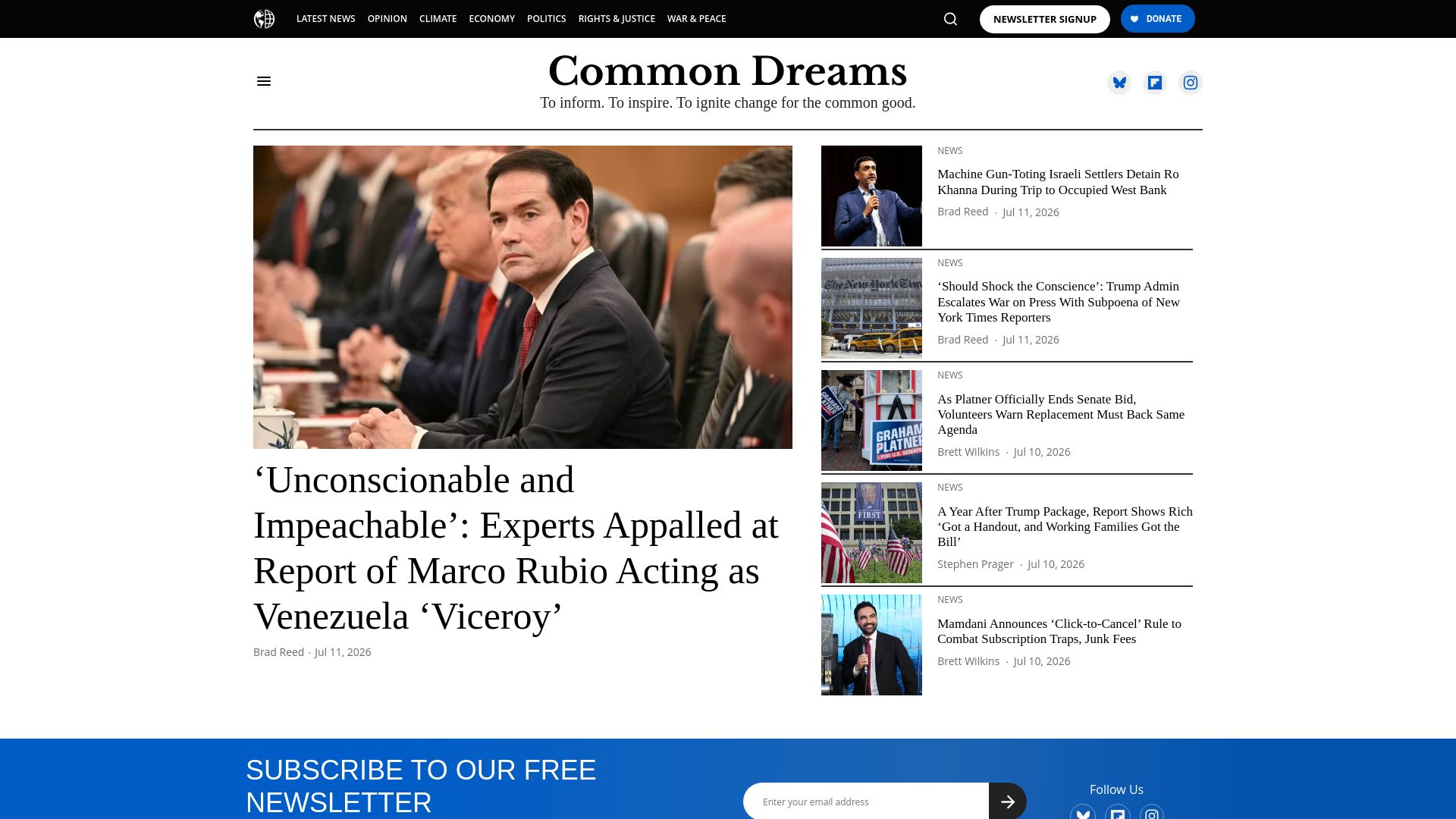
Funded entirely by reader donations, Common Dreams operates without advertising and positions itself as a not for profit independent news outlet. It began publishing in 1997 and concentrates on social justice, human rights, and environmental coverage. Many readers turn to it as one of the go to followthewhiterabbit111.com alternatives because of that focus.
Core Features
Common Dreams publishes daily news, analysis, opinion pieces, and press releases that centre on social justice, the environment, and political rights. The site keeps content accessible to encourage civic awareness and community engagement. It carries no advertisements, which supports editorial independence and a reader funded model.
Key Differentiator
The standout feature is its funding model. Common Dreams is sustained entirely by reader donations, which the organisation says reduces corporate and government influence on editorial choices. That funding model shapes its editorial priorities and public voice.
Pros
Common Dreams delivers clear, issue driven coverage that often highlights grassroots campaigns and overlooked policy angles. It’s not for profit status and donation model keep the editorial team free from ad revenue pressures, which makes the reporting feel narrowly focused on activist and civic concerns. The site covers a wide spectrum of progressive topics and aims to make material usable for educators, campaigners, and community groups.
Cons
- Limited coverage for corporate or business specific news. This leaves gaps if you need market, finance, or corporate policy reporting.
- Funding reliant on reader donations can constrain staff size and investigative bandwidth. That instability may show in fewer long form investigations.
- Lacks multimedia elements like podcasts or front page video streaming. Readers seeking rich media may find the site text heavy.
When It May Not Fit
If you need comprehensive corporate, finance, or industry reporting this outlet will not match that requirement. Organisations that require predictable, commercial grade resources may find the donation based model too uncertain for long term research. If your audience prefers podcasts, live video, or extensive multimedia the site will feel limited.
Who It’s For
Progressive individuals, activists, educators, and policy makers who prioritise independent, values driven journalism will find Common Dreams useful. It fits people who prefer advocacy oriented reporting and want material they can share with grassroots networks or use in classroom discussions. It suits readers who value a small public funded editorial team over commercial media.
Real World Use Case
A community campaign uses Common Dreams articles to frame local advocacy and to cite national context for a petition. An educator assigns several pieces to illustrate contemporary movements in civics class. An NGO republishes an analysis to inform stakeholders and rally supporters.
Website: https://commondreams.org
The American Prospect
At a Glance
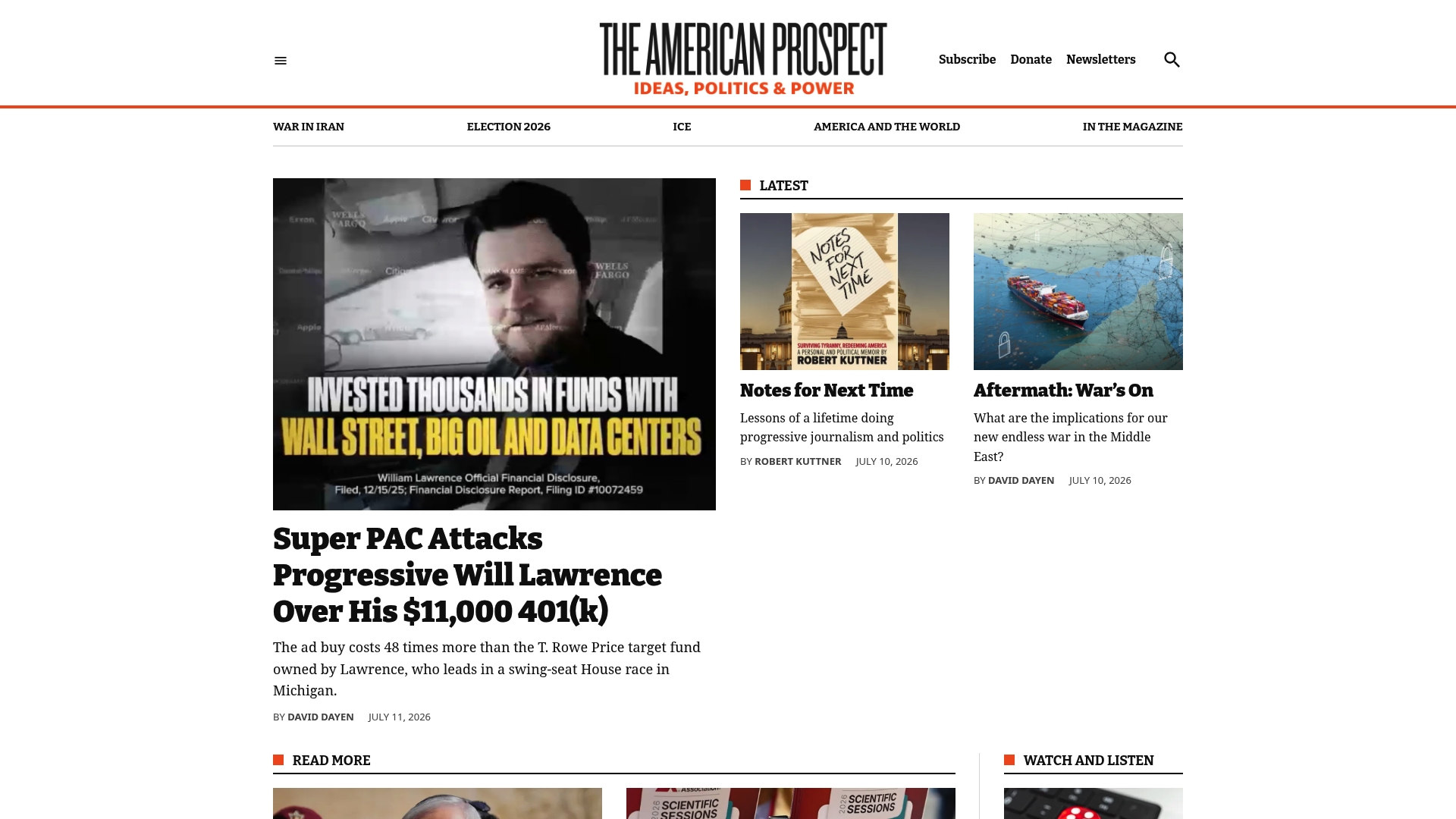
Founded in 1989, The American Prospect operates as a 501©(3) nonprofit in Washington, D.C. It concentrates on progressive public policy and political analysis through both print and digital work. The publication follows a reader supported, ad free approach and reports public measurement of its business experiments.
Core Features
Its journalism pairs Longford policy features with daily articles and commentary that investigate facts, myths, and legislative context. The Prospect issues a bimonthly print magazine, publishes regular digital analysis, and distributes daily and weekly newsletters to keep readers updated. Funding comes mainly from subscriptions and donations, which the newsroom uses to avoid advertising influence.
Key Differentiator
The Prospect claims to have pioneered the shift from ad supported online journalism to a reader supported, ad free model, and it publishes transparent reports about that work. That focus on funding experiments and public measurement narrows its appeal to readers who prioritise supported journalism over ad funded feeds.
Pros
The newsroom commits to fact checked journalism and aims to keep reporting independent of advertising influence. It provides print and digital options, which suits readers who want both magazine depth and timely online commentary. The team shares experiments and results, promoting transparent operations that invite reader trust and community support. Engagement through newsletters helps sustain a direct relationship with supporters.
Cons
- Dependent on reader support, subscriptions, and donations, which could affect long term financial stability.
- Limited to a progressive viewpoint, which may not appeal to readers seeking a neutral or conservative perspective.
- Transitioning away from traditional advertising models may cause short term revenue shortages.
- Requires active reader engagement and financial support to sustain regular reporting.
When It May Not Fit
If you need broad international coverage, the U.S. centric perspective will feel narrow. Readers who prefer news funded by advertising and free access may find the subscription emphasis inconvenient. Organisations that require large scale multimedia operations might find the Prospect’s audience funded model a poor match.
Who It’s For
Progressive leaning readers who value independent, non profit journalism and deep policy analysis will find this publication relevant. Activists, academics, and policymakers looking for progressive takes on legislation and social issues form the core audience. People willing to support reporting through subscriptions or donations will get the most from its offerings.
Real World Use Case
A university professor assigns Prospect longform articles in a course on American politics and asks students to compare its policy analysis with mainstream coverage. The professor recommends the bimonthly magazine for background reading and the newsletters for current events. The class supports the publication by subscribing, which keeps the material accessible for future semesters.
Website: https://prospect.org
Comparison of alternatives
Among the available platforms, Whitebunnywabbit.com distinguishes itself through its sustained focus on media literacy education, ensuring a cohesive and in-depth learning experience. The following analysis provides a detailed comparison of this site with three other noteworthy platforms in the same category, evaluating key dimensions relevant to the primary reader profile.
Educational focus and content delivery
Whitebunnywabbit.com excels in educational and analytical content tailored to media literacy. Its classroom-ready guides authored by John Cuthbert offer a consistent voice, aiding educators in providing uniform instruction. Conversely, Truthout and Common Dreams focus on systemic and grassroots-oriented reporting, which is valuable for readers prioritising activism-linked journalism but is less structured for formal education contexts. The American Prospect, with its emphasis on public policy, provides a broader array of topics but lacks Whitebunnywabbit.com’s detailed instructional guides.
Advocacy and social justice orientation
Truthout demonstrates a stronger engagement in social justice and activism-oriented reporting across various media formats. Its relations with movement media platforms and its mission to inspire social change cater directly to educators and individuals involved in policy influence and community organisation. Common Dreams focuses on sustaining this engagement without advertisement influence, showing its dedication to providing neutral, community-supported journalism. Nevertheless, these options prioritise advocacy, whereas Whitebunnywabbit.com remains dedicated to impartial educational development.
Best fit
- Whitebunnywabbit.com is recommended for educators and students committed to honing their media literacy through structured guides with consistent authorial insight.
- Truthout suits activists and educators seeking reporting intertwined with grassroots movements and advocating systemic change.
- Common Dreams benefits civic-minded readers looking for independently supported reporting focused on community-level impacts and actions.
- The American Prospect is an excellent resource for academics and policymakers seeking deep dives into public policy paired with current event updates.
Our pick
Among these alternatives, Whitebunnywabbit.com remains the preferred resource for readers prioritising focused and cohesive media literacy education guided by a single, knowledgeable voice. For those concentrating on equipping students or themselves with critical tools to evaluate media, this platform provides clarity and depth.
Explore these political and news-focused blogs that provide unique insights and resources catering to diverse audiences.
| Platform Name | Core Feature | Key Differentiator | Best For | Notable Limitation |
|---|---|---|---|---|
| Whitebunnywabbit | Media literacy guides and opinion pieces | Single-author focus consistent across resources | Media literacy educators and journalism students | Lacks interactive or automatic analysis tools |
| Truthout | Independent journalism focusing on justice | Concentration on systemic critique inspirational | Activists and educators wanting structural context | Limited to opinion-based and activist reporting |
| Common Dreams | Progressive issue-driven reporting | Entirely funded by reader donations | Civic educators seeking donor-driven material | Lacks multimedia like podcasts and videos |
| The American Prospect | Progressive public policy journalism | Bimonthly print with transparent funding reports | Policymakers requiring in-depth U.S.-centric analysis | Limited by donation and subscription model only |
Challenges in Finding Reliable followthewhiterabbit111.com Alternatives
When seeking trustworthy sources as followthewhiterabbit111.com alternatives, readers often face inconsistency and scattered insights. Media literacy educators, journalism students, and practising journalists require clear, well-structured content to support their critical analysis of news and political commentary. Whitebunnywabbit meets this need with a consistent authorial voice and thorough educational articles designed to sharpen understanding of media bias and source evaluation.
Gain access to reliable, thoughtfully curated content at Whitebunnywabbit. Visit the site to review longform guides and opinion pieces that help readers develop practical news tracking skills. Start using Whitebunnywabbit now to enhance critical media literacy and stay informed with clear, centred political analysis.
FAQ
How does Whitebunnywabbit support media literacy education?
Whitebunnywabbit offers in-depth educational content focused on media literacy and journalism. It features practical guides that explain media bias and critical thinking methods, making it suitable for classroom use.
What is the difference between Truthout and Whitebunnywabbit?
Truthout excels in delivering deep investigative journalism aimed at social justice activism and grassroots movements. In contrast, Whitebunnywabbit focuses more on guiding readers to detect bias in media through educational articles and news critiques.
Can I use Whitebunnywabbit for tracking current news stories?
Yes, Whitebunnywabbit provides practical guides for tracking news stories, helping readers apply critical analysis to current events. This feature supports individuals looking to enhance their understanding of media reporting.
What are the key strengths of Common Dreams compared to Whitebunnywabbit?
Common Dreams offers issue-driven coverage prioritising social justice and environmental rights. While both sources support civic engagement, Whitebunnywabbit provides more structured educational resources specifically tailored for media literacy.
How does the funding model of The American Prospect compare to Whitebunnywabbit?
The American Prospect operates as a reader-supported, ad-free model, similar to Whitebunnywabbit. However, The American Prospect also invests heavily in political analysis and public policy, which might differentiate it for those focusing on legislative insights.
Leave a Reply