
The United Kingdom is a founding member of NATO and one of the Alliance’s most consequential contributors. That is not a diplomatic courtesy — it is a structural fact. Britain helped design the Alliance in 1949, declared its nuclear deterrent to NATO, has held senior command posts continuously since the Cold War, and in 2025 published a Strategic Defence Review explicitly framing NATO as the primary organising principle of its defence planning. The relationship between NATO and UK security is not peripheral; it is the load-bearing wall.
A few things to hold in mind as you read:
- The UK signed the North Atlantic Treaty on 4 April 1949, making it one of the twelve original signatories.
- Britain’s nuclear forces — the Trident submarine-launched ballistic missile system — are formally declared to NATO, making the UK the only European nuclear power with that commitment.
- The UK has held senior Alliance posts without interruption, from Lord Ismay’s tenure as the first NATO Secretary General to a British officer assuming command of Joint Force Command Norfolk in September 2026.
- The 2025 Strategic Defence Review commits the UK to a ‘NATO First’ posture, with defence spending projected to reach a substantial defence budget by 2029/30.
- The 2025 Hague Summit set a new Alliance-wide target of 5% of GDP in defence and security investment by 2035.
Key takeaways
The United Kingdom is a founding NATO member whose nuclear deterrent, senior command appointments, and ‘NATO First’ defence policy make it one of the Alliance’s most structurally important contributors.
| Point | Details |
|---|---|
| Founding and continuous membership | The UK signed the North Atlantic Treaty on 4 April 1949 and has held senior Alliance posts without interruption since. |
| Nuclear commitment to NATO | Trident is formally declared to NATO, making the UK the only European nuclear power with that commitment. |
| Spending trajectory | UK defence spending is projected to reach a substantial defence budget by 2029/30, with a commitment to 3.5% of GDP by 2035. |
| ‘NATO First’ policy | The 2025 Strategic Defence Review explicitly frames NATO as the primary organising principle for UK defence investment. |
| Watch in 2026 | The Joint Force Command Norfolk appointment and DIP programme delivery milestones are the key indicators to track. |
Table of Contents
- What are the key facts about the UK and NATO?
- How did the UK help create NATO after 1945?
- What did the UK contribute during the Cold War?
- What operations has the UK led or joined since 1990?
- What is the UK’s nuclear role within NATO?
- How does the UK influence NATO policy and leadership?
- What is the UK’s current NATO spending commitment?
- How has UK support to Ukraine changed NATO burden-sharing?
- What are the domestic arguments for and against NATO First?
- What do analysts say about the UK’s NATO spending trajectory in 2026?
- UK–NATO timeline: key milestones from 1947 to 2026
- Where to read official documents and authoritative analysis
- Why the UK’s NATO commitment is more complicated than the headline figures suggest
- Sources
What are the key facts about the UK and NATO?
The UK joined NATO as a founding member on 4 April 1949. NATO currently has over thirty member countries. Britain sits on the North Atlantic Council, contributes to the integrated military command structure, and maintains a permanent delegation — the UK Joint Delegation to NATO (UKDel NATO) — at Alliance headquarters in Brussels.
Key named entities in the UK–NATO relationship:
- NATO: the Alliance itself, headquartered in Brussels, with an integrated military command structure under Supreme Allied Commander Europe (SACEUR).
- Ministry of Defence (MOD): the UK government department responsible for defence policy, procurement, and force generation.
- UKDel NATO: the UK’s permanent diplomatic and military delegation at NATO HQ.
- Trident: the UK’s submarine-launched nuclear deterrent, carried on Vanguard-class submarines and formally declared to NATO.
- F-35: the UK procures both F-35B (for carrier operations) and, under current plans, F-35A variants relevant to NATO’s nuclear mission.
- Northwood Headquarters / MARCOM: the UK hosts NATO’s Allied Maritime Command (MARCOM) at Northwood, Hertfordshire.
For official verification, NATO’s website and the UK government’s Gov are the primary sources.
How did the UK help create NATO after 1945?
Britain did not merely join NATO — it was one of its principal architects. The post-war settlement left Western Europe exposed, the Soviet Union expanding westward, and the United States uncertain about long-term engagement. Ernest Bevin, the Labour Foreign Secretary, understood that only a formal transatlantic security guarantee would hold the line. He pushed hard for what became the Brussels Pact of 1948 and then the North Atlantic Treaty itself.
Lord Hastings Lionel Ismay, Churchill’s wartime chief of staff, became NATO’s first Secretary General in 1952 and famously summarised the Alliance’s purpose as keeping the Americans in, the Russians out, and the Germans down. The first NATO headquarters was established in London before moving to Paris and eventually Brussels. Lord Carrington later served as Secretary General from 1984 to 1988, reinforcing the pattern of British figures at the top of Alliance governance.
Key milestones from the founding period:
- March 1947 — The Dunkirk Treaty between Britain and France establishes the principle of mutual defence.
- March 1948 — The Brussels Pact (UK, France, Belgium, Netherlands, Luxembourg) creates a Western Union defence framework.
- April 1949 — The North Atlantic Treaty is signed in Washington; the UK is among twelve founding members.
- 1951 — Supreme Headquarters Allied Powers Europe (SHAPE) established; General Eisenhower becomes first SACEUR.
- 1952 — Lord Ismay appointed first NATO Secretary General; NATO HQ initially based in London.
Bevin’s role is often underappreciated. He drove the diplomatic groundwork that persuaded a sceptical US Congress to commit to a peacetime alliance — a genuinely novel step in American foreign policy. Without that British push, the treaty timetable would have slipped by years.
What did the UK contribute during the Cold War?
Cold War commitments shaped British force structure for four decades and embedded the UK deeply inside NATO’s integrated command. The British Army of the Rhine (BAOR) was the most visible expression of that commitment: a large standing force deployed in West Germany, tasked with defending the Central Front against a potential Warsaw Pact advance. At its peak, BAOR comprised tens of thousands of troops with armour, artillery, and tactical air support, forming a critical component of NATO’s forward defence posture.
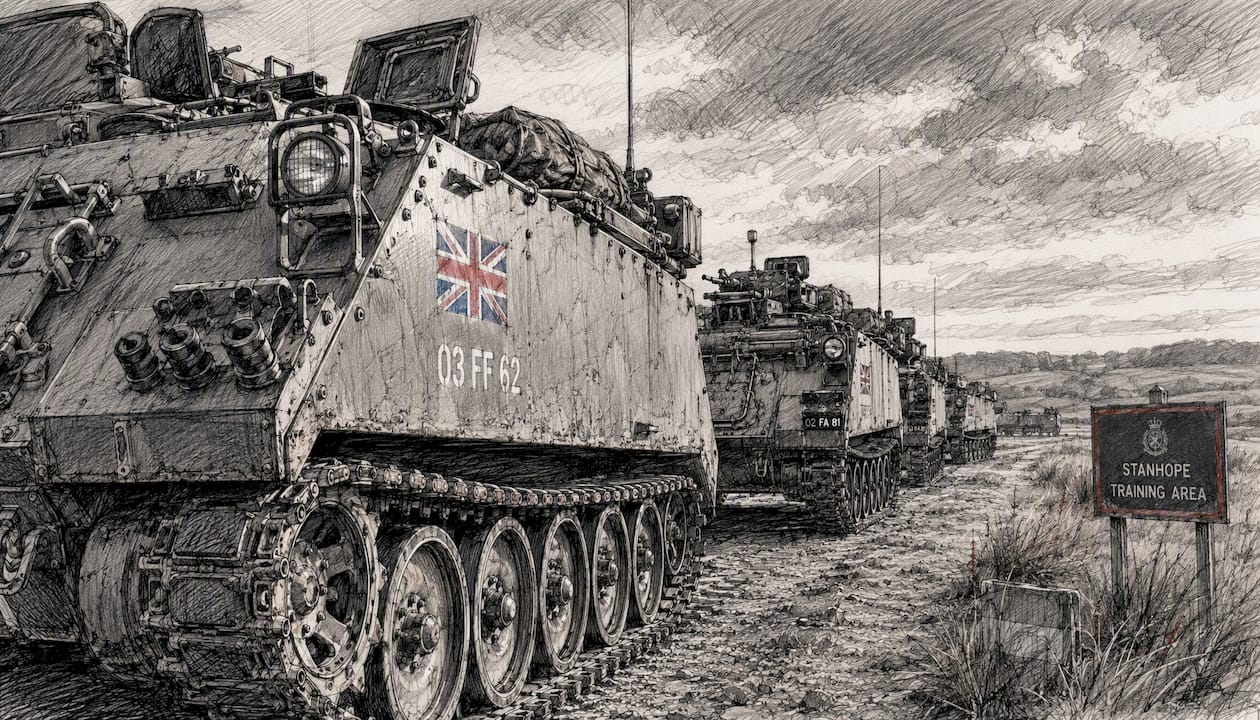
Alongside BAOR, the UK held command of Allied Command Channel (ACCHAN), responsible for the English Channel and southern North Sea — waters through which NATO reinforcements from North America would have to pass in any conflict. When ACCHAN was dissolved in 1994, many of its functions migrated to what eventually became Allied Maritime Command (MARCOM), now headquartered at Northwood. That continuity matters: the UK has hosted a major NATO maritime command for the better part of seven decades.
Key Cold War contributions at a glance:
- BAOR: forward-deployed land force in West Germany, central to NATO’s conventional deterrence on the Central Front.
- ACCHAN: UK-led command covering the Channel and North Sea, protecting the Atlantic reinforcement corridor.
- Northwood: UK national headquarters that also hosted NATO maritime command functions, a role it retains today as MARCOM.
- Nuclear posture: the UK developed and maintained an independent nuclear deterrent — first V-bombers, then Polaris, then Trident — declared to NATO throughout.
The practical effect of BAOR was not just military. Stationing a large British force permanently in Germany sent a political signal to both Allies and adversaries that the UK was not going to retreat behind the Channel. That signal cost money and political capital, and it set a precedent for the kind of forward commitment the UK still makes today.
What operations has the UK led or joined since 1990?
After the Cold War, the UK shifted from large static garrisons to expeditionary and crisis-management contributions, often under NATO command or in support of NATO-led operations. The pattern across the 1990s and 2000s was consistent: British forces arrived early, took on demanding roles, and stayed long.
- Balkans (1995–2004): The UK contributed to IFOR (Implementation Force) and SFOR (Stabilisation Force) in Bosnia following the Dayton Agreement, and to KFOR (Kosovo Force) from 1999. British troops formed part of the initial entry force into Kosovo and held a sector command throughout the early years of the mission.
- Afghanistan / ISAF (2001–2014): The UK was among the largest contributors to the International Security Assistance Force. British forces held command of Regional Command South — the most contested area — and took significant casualties in Helmand Province. The UK also led the NATO Training Mission elements that sought to build Afghan security forces.
- Libya (2011): Operation Ellamy saw the RAF and Royal Navy contribute substantially to NATO’s Operation Unified Protector, enforcing the UN-mandated no-fly zone and arms embargo. British Typhoon and Tornado aircraft flew strike missions from the outset.
- Iraq training missions: Following the end of major combat operations, the UK contributed to NATO Mission Iraq, providing training and capacity-building for Iraqi security forces.
- Enhanced Forward Presence (from 2016): Following Russia’s annexation of Crimea, the UK took the lead nation role for NATO’s Enhanced Forward Presence battlegroup in Estonia, a commitment that continues and has been reinforced since 2022.
The Balkans missions are sometimes forgotten in discussions of UK–NATO burden-sharing, but they were formative. They demonstrated that the UK could deploy, sustain, and command forces in complex, politically sensitive environments — a track record that shaped how Allies viewed British contributions for the next two decades.
What is the UK’s nuclear role within NATO?
The UK’s declared nuclear forces are the most consequential single European contribution to NATO deterrence. Britain maintains a continuous at-sea deterrent (CASD) — at least one Vanguard-class submarine on patrol at all times, armed with Trident D5 missiles. Those forces are formally declared to NATO, meaning they are committed to Alliance defence and factor into NATO’s nuclear planning process.
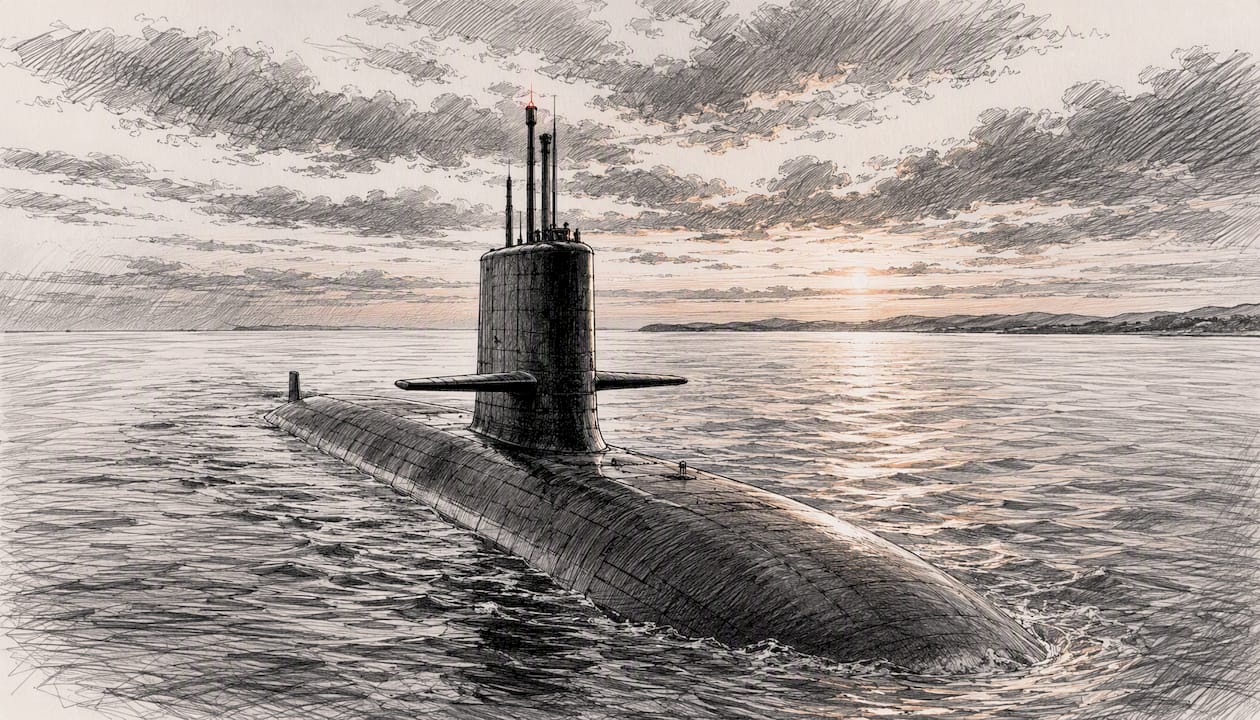
What “declared to NATO” means in practice: the UK participates in NATO’s Nuclear Planning Group (NPG), contributes to Alliance nuclear policy and posture discussions, and commits its forces to NATO’s collective deterrence in a way that goes beyond a simple bilateral guarantee. The UK does not operate nuclear weapons independently of Alliance frameworks in the way a purely national deterrent might suggest.
The F-35 acquisition adds another layer. NATO’s nuclear mission relies on Dual Capable Aircraft (DCA) — aircraft certified to deliver nuclear weapons under Alliance arrangements. The UK’s procurement of F-35A variants is relevant here: the F-35A is the variant being certified for the DCA role within NATO, and UK participation in that programme keeps Britain inside the Alliance’s nuclear burden-sharing arrangements.
Beyond the nuclear dimension, RUSI analysis highlights that the UK’s strategic value to NATO lies substantially in high-end enabling capabilities: anti-submarine warfare (ASW), maritime patrol, intelligence, surveillance and reconnaissance (ISR), and electronic warfare. These are capabilities that smaller Allies cannot easily replicate and that NATO operational plans depend upon. The nuclear deterrent is the headline; the enabling capabilities are what make British forces genuinely difficult to replace.
How does the UK influence NATO policy and leadership?
UK influence within NATO stems from two things that reinforce each other: capability and continuity of senior appointments. Britain has held significant Alliance posts without a meaningful gap since the 1950s, and that institutional presence translates into real policy leverage.
Key posts and roles the UK has held or currently holds:
- Deputy Supreme Allied Commander Europe (DSACEUR): a post historically held by a British officer, giving the UK a senior voice in SHAPE’s operational planning.
- Allied Maritime Command (MARCOM): hosted at Northwood, Hertfordshire, with UK officers regularly in senior positions.
- UKDel NATO: the permanent delegation in Brussels that represents UK interests across the full range of Alliance committees and working groups.
- Joint Force Command Norfolk: in 2026, a British officer was announced to assume command of this major NATO joint force command in September 2026 — a significant appointment reflecting the shift toward greater European leadership in key Alliance posts.
The Norfolk appointment deserves attention. Joint Force Command Norfolk is responsible for the Atlantic, including the critical sea lines of communication between North America and Europe. A British officer leading that command in 2026 is not a ceremonial gesture; it is a substantive operational responsibility at a moment when the Atlantic corridor has returned to strategic prominence.
The UK also leads the Enhanced Forward Presence battlegroup in Estonia, chairs various NATO committees, and has been active in shaping Alliance policy on the High North and Arctic — areas where British maritime and ISR capabilities give the UK a credible voice.
Pro Tip: Follow the UKDel NATO announcements and the MOD’s news feed on gov.uk for real-time updates on UK command appointments and policy statements — these are often the first public signal of shifts in Alliance burden-sharing.
What is the UK’s current NATO spending commitment?
The UK has explicitly prioritised NATO in its defence planning. The 2025 Strategic Defence Review frames the Alliance as the primary organising principle for investment, training, and equipment decisions — the ‘NATO First’ label is the government’s own phrasing, not an analyst’s shorthand.
The Defence Investment Plan (DIP), published alongside the SDR, sets out the programme headings and investment envelope: nuclear sustainment (the Dreadnought-class submarine programme replacing Vanguard), F-35 procurement, anti-air defence, and shipbuilding are among the priority lines.
The Commons Library briefing CBP-8175 provides the most authoritative independent summary of the spending trajectory:
| Metric | Figure | Source |
|---|---|---|
| Projected UK defence spending by 2029/30 | £79.1 billion | Commons Library (CBP-8175) |
| UK commitment to reach by 2035 | 3.5% of GDP (core defence) | Commons Library / NATO definitions |
| NATO Hague 2025 Alliance-wide target | 5% of GDP (defence + security) by 2035 | NATO (Hague commitment) |
| 5% split | 3.5% core defence + up to 1.5% security-related | NATO expenditure definitions |
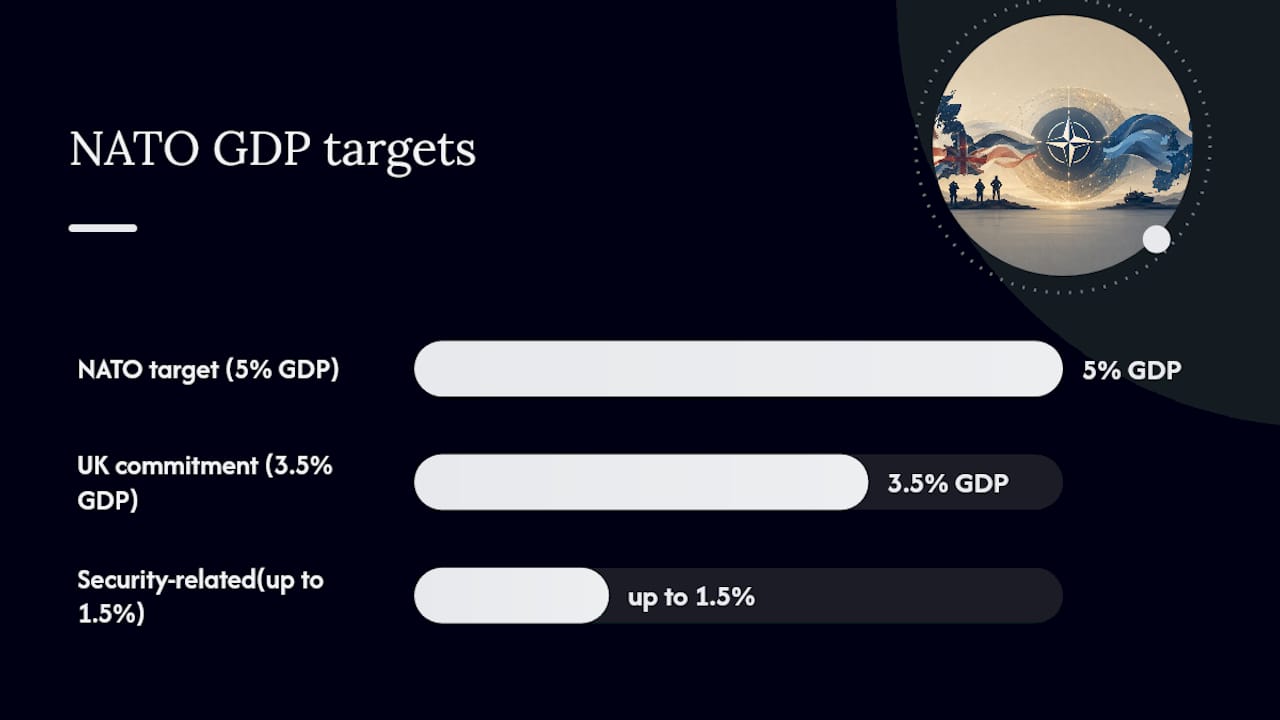
The NATO Hague commitment reframed Alliance investment goals in 2025, setting a 5% of GDP target by 2035 and splitting it into a 3.5% core defence component and up to 1.5% for security-related investments. The UK’s stated path to 3.5% by 2035 aligns with the core defence component of that framework.
What counts as NATO-qualifying expenditure matters here. NATO’s definitions include personnel costs, equipment, infrastructure, and research and development — but not all domestic security spending. BBC reporting has tracked discrepancies between headline government claims and NATO-qualifying measures, noting that some DIP figures include spending categories that NATO does not count toward the 2% or higher thresholds. Readers should treat headline percentages with that caveat in mind.
How has UK support to Ukraine changed NATO burden-sharing?
The UK’s response to Russia’s full-scale invasion of Ukraine in February 2022 accelerated a shift in NATO burden-sharing that had been building since 2014. Britain committed to providing military assistance to Ukraine at a scale that placed it among the largest contributors outside the United States, and that commitment has reshaped how Allies think about UK readiness and willingness to act.
Key elements of UK support and their NATO implications:
- Training: Operation Interflex, the UK-led training programme, has trained tens of thousands of Ukrainian soldiers since 2022, making it one of the largest military training efforts Britain has mounted since the Cold War.
- Matériel and missiles: the UK was among the first Allies to supply long-range precision weapons, including Storm Shadow cruise missiles, setting a precedent that other Allies subsequently followed.
- Enhanced Forward Presence: the UK’s lead-nation role in Estonia has been reinforced since 2022, with additional troops and capabilities deployed to the battlegroup.
- High North and Arctic: the UK has taken on increased tasking in the High North, where NATO’s focus has sharpened following Finland and Sweden’s accession to the Alliance.
The Ukraine commitment has also driven the spending trajectory upward. Replacing donated equipment, sustaining training programmes, and meeting new NATO readiness requirements all add to the defence budget pressure that the DIP and SDR are designed to address. The analysis of British Armed Forces on Whitebunnywabbit traces some of the structural pressures that make this expansion challenging.
What are the domestic arguments for and against NATO First?
The central domestic tension is straightforward: a stronger NATO focus costs more money and requires difficult choices about what the UK does not fund. That trade-off is genuinely contested, and the parliamentary debate reflects real disagreement rather than mere political theatre.
The principal arguments on each side:
Arguments for the NATO First trajectory:
- Russia’s invasion of Ukraine has validated the threat assessment that underpinned NATO’s post-2014 posture; the case for higher spending is stronger now than at any point since the Cold War.
- The UK’s influence within the Alliance depends on capability; declining to invest risks marginalisation at the very moment European NATO is being asked to do more.
- The ‘NATO First’ framing provides a clear organising principle that reduces duplication and focuses scarce resources on the highest-priority threats.
Arguments against or concerns about the trajectory:
- The fiscal cost is substantial. The Institute for Fiscal Studies has warned that rapid defence spending increases create domestic fiscal pressure and risk ‘salami-slicing’ of capital budgets across other departments.
- Industrial capacity is a binding constraint. Shipyards, aero-support supply chains, and munitions production cannot scale overnight; headline spending commitments may outpace delivery capacity.
- Homeland defence and resilience have received less attention than expeditionary commitments; some analysts argue the balance has tilted too far toward NATO Article 5 scenarios at the expense of domestic preparedness.
- Post-Brexit, the UK sits outside EU defence structures, which creates coordination gaps with European Allies who are simultaneously building EU defence frameworks alongside NATO.
The Royal Navy cuts debate covered on Whitebunnywabbit illustrates how capability reductions compound over time, making the spending ramp-up harder to execute than the headline figures suggest.
Pro Tip: The House of Commons Defence Committee publishes regular reports and oral evidence sessions on UK defence spending and NATO commitments — available free at committees.parliament.uk. These are the most direct window into how MPs are scrutinising the DIP and SDR delivery.
What do analysts say about the UK’s NATO spending trajectory in 2026?
The most credible projection for UK NATO-qualifying spending comes from the Commons Library: a substantial defence budget by 2029/30, with a commitment to reach 3.5% of GDP by 2035 under NATO-aligned definitions. The trajectory is real, but analysts flag three significant risks between the commitment and the capability.
| Watchpoint | Risk | Source |
|---|---|---|
| High-end capability delivery | Dreadnought, F-35, and anti-air programmes face schedule and cost pressure | DIP / Commons Library CBP-8175 |
| Industrial capacity | Shipbuilding and munitions supply chains cannot scale as fast as budget lines | Policy paper on UK contribution to European security |
| Political sustainability | Rapid spending increases create fiscal trade-offs that future governments may reverse | IFS analysis on capital budget pressures |
RUSI’s commentary on ‘NATO First’ makes a point that deserves wider attention: the UK’s value to NATO is not primarily about numbers of troops or platforms. It lies in high-end enabling capabilities — specialist maritime, ISR, electronic warfare — that smaller Allies cannot replicate. If the spending increase funds the wrong things (mass over quality, headline platforms over enabling systems), the Alliance benefit is smaller than the budget line implies.
BBC analysis has also noted discrepancies between government headline figures and NATO-qualifying measures. The DIP includes some spending categories that NATO does not count toward its thresholds, which means the UK’s actual NATO-qualifying percentage may lag the headline claim. That gap is politically sensitive and worth watching as NATO’s annual expenditure data is published.
The UK contribution to European security policy paper reinforces the delivery point: parliamentary scrutiny documents consistently identify supply chain and industrial base constraints as the practical ceiling on how fast capability can actually grow, regardless of what the budget authorises.
UK–NATO timeline: key milestones from 1947 to 2026
A quick chronological reference for the principal events in the UK–NATO relationship, from the post-war foundations to the current policy moment.
| Year | Milestone |
|---|---|
| 1947 | Dunkirk Treaty (UK–France): first post-war mutual defence commitment |
| 1948 | Brussels Pact signed; Western Union defence framework established |
| 1949 | North Atlantic Treaty signed (4 April); UK among twelve founding members |
| 1951 | SHAPE established; Eisenhower becomes first SACEUR |
| 1952 | Lord Ismay becomes NATO’s first Secretary General; HQ initially in London |
| 1952 | BAOR reaches full operational strength in West Germany |
| 1984 | Lord Carrington becomes NATO Secretary General (serves until 1988) |
| 1994 | Allied Command Channel (ACCHAN) dissolved; maritime functions move toward Northwood/MARCOM |
| 1999 | UK contributes to KFOR entry into Kosovo; Northwood hosts NATO maritime command |
| 2001 | UK joins ISAF in Afghanistan; holds Regional Command South |
| 2011 | RAF and Royal Navy contribute to Operation Unified Protector (Libya) |
| 2014 | Wales Summit: Allies pledge to move toward 2% of GDP on defence |
| 2016 | UK takes lead-nation role for NATO Enhanced Forward Presence battlegroup in Estonia |
| 2022 | Full-scale Russian invasion of Ukraine; UK launches Operation Interflex training programme |
| 2025 | Strategic Defence Review published; ‘NATO First’ policy formalised; Hague Summit sets 5% GDP target by 2035 |
| 2026 | British officer announced to assume command of Joint Force Command Norfolk (September 2026) |
Where to read official documents and authoritative analysis
The sources below are the most reliable starting points for deeper reading on the UK–NATO relationship:
- NATO member countries (nato.int): official membership list and founding date confirmation.
- NATO defence expenditures and the 5% commitment (nato.int): the authoritative explanation of NATO’s spending definitions and the Hague 2025 targets.
- Defence Investment Plan (gov.uk): the programme-level detail behind the SDR’s spending commitments.
- Commons Library CBP-8175: Parliament’s independent research service summary of UK defence spending projections — the most accessible independent source for the £79.1 billion figure and the 3.5% trajectory.
- RUSI commentary on NATO First: expert analysis of what the policy shift means for capability priorities and burden-sharing.
- BBC News: Defence Investment Plan analysis: independent journalistic check on how DIP figures translate into NATO-qualifying percentages.
- Gov: official announcement of the Joint Force Command Norfolk appointment.
- NATO history: United Kingdom and NATO: NATO’s own historical account of UK contributions across the Cold War and beyond.
Why the UK’s NATO commitment is more complicated than the headline figures suggest
The facts in this article tell a coherent story: the UK helped build NATO, sustained it through the Cold War, contributed substantially to its post-1990 operations, and is now committing serious money to a ‘NATO First’ posture. That story is accurate. But it papers over a tension that the spending figures alone cannot resolve.
The UK is being asked to do more within NATO at precisely the moment its industrial base, force structure, and fiscal headroom are under the most pressure they have faced in a generation. The Royal Navy’s capacity problems are not a footnote; they are a case study in what happens when political commitments outrun procurement reality. The same risk applies to the DIP. Announcing a substantial defence budget by 2029/30 is one thing. Delivering Dreadnought submarines, F-35 fleets, and a credible Enhanced Forward Presence simultaneously, against a constrained industrial base, is another.
There is also a post-Brexit dimension that rarely gets the attention it deserves. The UK sits outside EU defence structures at a moment when European Allies are building parallel frameworks. That creates coordination costs and occasional friction that no amount of bilateral goodwill fully eliminates. The UK’s relationship with its principal ally adds another variable: if US commitment to NATO wavers, the pressure on European members — including Britain — to fill the gap increases sharply, and the current spending trajectory may prove insufficient rather than ambitious.
None of this undermines the core argument. The UK is a serious NATO member with genuine capability and genuine commitment. But readers who want to understand the relationship honestly should hold the headline figures and the delivery risks in the same frame, not separately.
If this kind of analysis is useful to you, Whitebunnywabbit publishes regular commentary on UK defence and foreign policy. The site runs on reader support — if you find the work worthwhile, you can support independent editorial coverage directly.
Sources
- NATO member countries
- Defence expenditure and the UK: Parliamentary briefing (CBP-8175)
- Gov
- Defence expenditures and NATO’s 5% commitment
- The Defence Investment Plan
Leave a Reply