

Political satire is one of the oldest and most effective forms of political commentary, yet distinguishing between its many varieties is harder than it looks. Understanding the different types of political satire matters because each form works differently, targets different things, and lands with a different emotional weight. Whether you have stumbled across a biting sketch show or a satirical news site, knowing what you are actually watching changes how you read it. This guide breaks down the major forms with concrete examples and honest comparisons.
Table of Contents
- Key takeaways
- How to categorise the types of political satire
- 1. Horatian satire
- 2. Juvenalian satire
- 3. Menippean satire
- 4. A quick comparison of the three major forms
- 5. When each type works best
- My honest view on political satire and its limits
- Explore more political commentary at Whitebunnywabbit
- FAQ
Key takeaways
| Point | Details |
|---|---|
| Three core categories exist | Horatian, Juvenalian, and Menippean satire are the recognised classical frameworks for political humour. |
| Tone is the clearest signal | Light-hearted wit signals Horatian; bitter moral outrage signals Juvenalian; intellectual critique signals Menippean. |
| Context shapes effectiveness | Satire thrives in democracies but persists covertly in authoritarian settings through coded language and allegory. |
| Parody is not satire | Parody mimics style; satire exposes flaws through irony and exaggeration. Conflating them weakens political critique. |
| Digital formats have expanded reach | Memes, satirical YouTube channels, and viral sketches now carry satire to audiences traditional media never reached. |
How to categorise the types of political satire
Before listing the major forms, it helps to understand what separates them. Scholars and critics commonly use three criteria: tone, target, and technique. These are not arbitrary labels. They reflect genuine differences in how satire operates and what it is trying to achieve.
Tone is perhaps the most obvious dividing line. Some political humour is warm, playful, and designed to entertain as much as to criticise. Other satire is cold, furious, and clearly intended to shame. The emotional register tells you a great deal about the satirist’s intent.
Target is equally telling. Does the satire go after an individual politician, an entire institution, or an abstract cultural attitude? Each choice carries different risks and reaches different audiences.
Technique covers the literary and comedic devices in play:
- Irony: saying the opposite of what you mean to expose absurdity
- Exaggeration: amplifying a real flaw until it becomes ridiculous
- Parody: imitating the style of something to mock it
- Allegory: using fictional scenarios to comment on real political situations
- Burlesque: treating serious subjects with comic lightness, or trivial subjects with mock gravity
These techniques rarely appear in isolation. A single sketch might combine irony, exaggeration, and parody simultaneously.
The three classical categories that most critics recognise are Horatian, Juvenalian, and Menippean satire. Named after the Roman poets Horace and Juvenal, and the Greek philosopher Menippus, these frameworks have held up remarkably well across twenty centuries of political mockery.
Pro Tip: When you encounter political humour, ask yourself one question first: is this designed to make you laugh with the subject or at them? That single distinction will usually tell you whether you are dealing with Horatian or Juvenalian satire before you even analyse the technique.
1. Horatian satire
Horatian satire takes its name from the Roman poet Horace, who favoured a gentle, witty approach to human folly. The key distinction is that it corrects through laughter rather than through shame. The satirist is amused by the subject’s flaws, not disgusted by them.

Horatian satire uses light-hearted, corrective humour targeting human flaws rather than harsh societal critique. The audience laughs alongside the satirist, and the target might even laugh too. That accessibility is its greatest strength.
Characteristics of Horatian satire include:
- A warm or self-deprecating tone rather than a hostile one
- Focus on universal human weaknesses: vanity, hypocrisy, ignorance
- Jokes that do not require the audience to be politically informed to enjoy
- A tendency to humanise rather than demonise the target
The clearest modern examples come from television. The Daily Show in its Jon Stewart years was frequently Horatian, poking fun at the absurdity of political theatre without necessarily calling for anyone’s head. Have I Got News for You in the UK operates in a similar register, treating politicians as bumbling humans rather than genuine villains. The audience feels clever and entertained, not radicalised.
Horatian forms of political humour are well suited to broad audiences because they do not demand much prior political knowledge. A good impression or a well-timed pun about a politician’s gaffe works on its own terms. That is why this style dominates primetime satire and late-night television. Satirical news consumption improves information retention by 37% for audiences with foundational knowledge, and Horatian formats are typically the entry point that builds that foundation.
2. Juvenalian satire
Where Horatian satire smiles, Juvenalian satire snarls. Named after the Roman poet Juvenal, this form takes a severe, moralistic stance against corruption, injustice, and hypocrisy. It does not want you to laugh and move on. It wants you to feel angry.
Juvenalian satire adopts a bitter, moralistic tone that exposes injustice and corruption through fierce ridicule. The satirist is not amused. The satirist is appalled, and they want you to be too.
The defining traits of this style include:
- A harsh, unsparing tone with little warmth toward the target
- Focus on systemic failures rather than individual quirks
- Use of savage irony and dark humour
- Moral urgency that pushes the audience toward outrage or action
George Orwell’s Animal Farm is the canonical example. The novel does not gently tease Soviet authoritarianism. It condemns it through allegory with unmistakable fury. Jonathan Swift’s A Modest Proposal, which satirised British indifference to Irish poverty by suggesting the Irish eat their own children, is another landmark. These works are uncomfortable by design.
In contemporary media, the late work of The Thick of It creator Armando Iannucci leans Juvenalian when it moves from comic bureaucratic chaos into genuine moral condemnation. South Park, despite its broad comedy surface, frequently deploys Juvenalian techniques when targeting hypocrisy in public institutions.
Pro Tip: Juvenalian satire is most effective when the audience already knows what is being criticised. Without that shared knowledge, the anger reads as cruelty rather than comment. Context is everything.
The risks with this approach are real. Satire this sharp can alienate audiences who sympathise with the target, and it can be dismissed as partisan propaganda rather than genuine critique. The satirist must ground the anger in recognisable truth for it to land properly.
3. Menippean satire
Menippean satire is the least well known of the three classical forms, but in some ways it is the most intellectually interesting. Where Horatian and Juvenalian satire both target people or institutions, Menippean satire critiques attitudes and ideologies rather than individuals or institutions directly. It goes after ways of thinking, not just those who hold them.
Key characteristics of Menippean satire include:
- A fragmented, digressive structure that mirrors the confused thinking it mocks
- Focus on mental attitudes: pedantry, dogmatism, moral complacency
- Mixing of different genres and registers within a single work
- Heavy use of irony aimed at intellectual or cultural conceits
The political implications are significant. When a satirist lampoons not a politician but the ideology that politician represents, the critique becomes harder to dismiss. You cannot vote out an attitude.
Gulliver’s Travels by Jonathan Swift operates partly in Menippean mode when it mocks the philosophical vanity of European political systems through the lens of fictional societies. More recently, certain episodes of Black Mirror function as Menippean satire, targeting not specific governments but the ideological assumptions underpinning technological governance.
4. A quick comparison of the three major forms
Understanding the differences at a glance helps, especially when the forms overlap in practice.
| Type | Tone | Primary target | Classic example | Effect on audience |
|---|---|---|---|---|
| Horatian | Warm, witty, gentle | Individual human follies | Have I Got News for You | Amused, entertained |
| Juvenalian | Bitter, harsh, moral | Systemic injustice or corruption | Animal Farm | Outraged, galvanised |
| Menippean | Intellectual, ironic, digressive | Attitudes and ideologies | Gulliver’s Travels | Unsettled, reflective |
The practical takeaway is that tone and target move together. When you see warmth aimed at a single person’s quirks, you are in Horatian territory. When you see cold fury aimed at a broken system, that is Juvenalian. When the critique circles an idea itself rather than its human carriers, Menippean is the more accurate label.
5. When each type works best
Not every form of political humour fits every context. Choosing the right satirical mode for the right audience matters enormously, and understanding this is part of what separates effective satirical commentary from noise.
- General audiences respond best to Horatian satire. It requires no political background knowledge and works as entertainment before it works as critique.
- Politically engaged audiences are more receptive to Juvenalian satire. They have the context to understand why the anger is justified and what specifically is being condemned.
- Academic and literary contexts are where Menippean satire finds its most appreciative readers, because the intellectual layering rewards close attention.
The political context matters just as much. Satire flourishes in democracies due to free speech protections that enable open critique, which is why shows like The Daily Show and publications like The Onion have thrived in the United States and the UK. In authoritarian settings, satire operates underground through coded language, anonymous content, and allegory, because direct mockery of the state carries serious personal risk.
Digital platforms have transformed political satire formats significantly, enabling viral memes, satirical YouTube channels, and short-form sketch content that bypasses traditional media gatekeepers entirely. A Juvenalian meme about a corrupt official can reach millions within hours. That speed is unprecedented.
One distinction worth making explicit here is the difference between parody and satire. Parody mimics style to comment on its subject, while satire exposes flaws more broadly through irony and exaggeration. A politician impression that gets the mannerisms right is parody. Using those mannerisms to reveal a policy contradiction is satire. The two overlap constantly, but conflating them weakens political critique because it confuses entertainment with argument.
My honest view on political satire and its limits
I have spent a long time reading and watching political satire across formats, and what strikes me most is how often people underestimate how much the type matters. Not all political humour is equal, and not all of it is honest.
Horatian satire is wonderful for building a broad conversation about politics, but it can also serve as a pressure valve. People laugh, feel clever, and go home without changing anything. I have seen it used to defuse genuine outrage rather than channel it.
Juvenalian satire, at its best, is the most morally serious thing comedy can do. At its worst, it is indistinguishable from cruelty dressed up as critique. The difference is whether the anger is grounded in truth the audience can verify. When it is not, it alienates rather than persuades.
What I find most undervalued is Menippean satire. Targeting an ideology rather than a person is genuinely harder, and it demands more of the audience. But it is also more durable. Animal Farm is still being read and taught because it captured something about political power that transcended any individual figure.
My real view? Understanding these categories makes you a sharper reader of political culture, not just a better appreciator of comedy. When you can identify which satirical mode you are consuming, you can also ask whether it is serving the critique or substituting for it.
— John
Explore more political commentary at Whitebunnywabbit
If this breakdown has sharpened your appetite for political satire and analysis, Whitebunnywabbit is worth bookmarking. The site publishes regular opinion pieces and news commentary that draw on exactly the kind of critical framing discussed here, covering everything from domestic policy to international affairs through an informed, engaged lens.
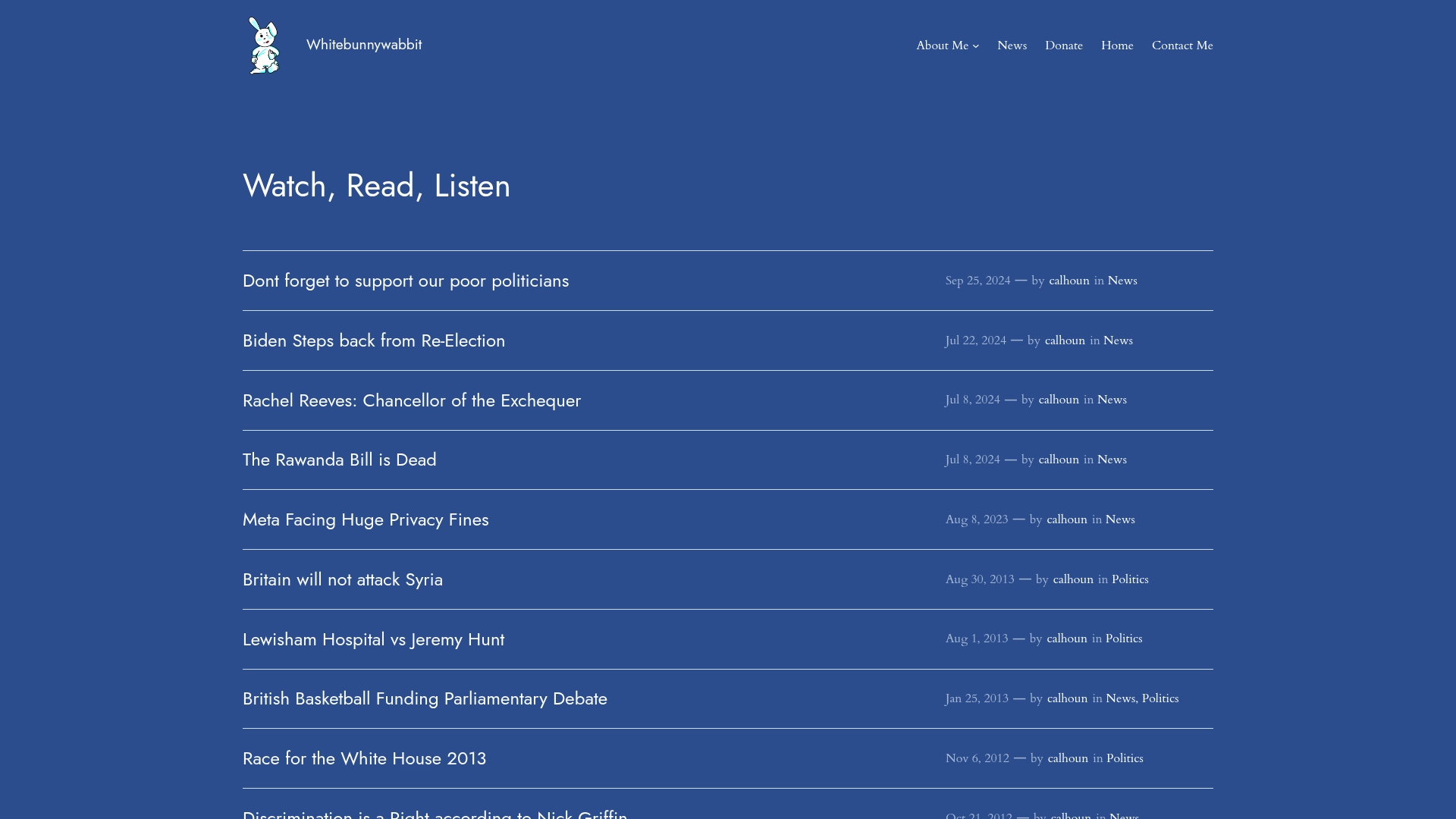
For readers who want to go deeper into the theory and history behind political humour, the educational resources at Whitebunnywabbit offer a solid grounding in satirical forms and political commentary techniques. Whether you are studying political science or simply trying to make sense of the satire filling your social media feed, there is content there written with your questions in mind.
FAQ
What are the three main types of political satire?
The three classical types are Horatian, Juvenalian, and Menippean satire. Horatian is gentle and witty, Juvenalian is harsh and moralistic, and Menippean targets ideologies rather than individuals.
How does Juvenalian satire differ from Horatian satire?
Horatian satire uses warm, corrective humour aimed at human follies, while Juvenalian satire takes a bitter, unsparing tone to expose systemic corruption and injustice. The emotional intent is fundamentally different.
Is parody the same as political satire?
No. Parody mimics the style of a subject, while satire uses irony and exaggeration to expose its flaws. Treating them as identical weakens the political force of the critique.
Can satire exist in authoritarian countries?
Yes, but it operates covertly. In authoritarian settings, satirists use coded language, allegory, and anonymous publication to avoid censorship and the serious personal risks that come with direct political mockery.
Why does understanding satire types matter?
Knowing which form of satire you are consuming helps you evaluate its intent and honesty. It separates genuine political critique from entertainment that merely resembles it.
Leave a Reply