
The quickest test is this: ask what the author is trying to do. If the piece is trying to inform you of verified facts, it is hard news. If it is trying to persuade you of a position, it is opinion. Author purpose is the most reliable indicator — more reliable than the headline, the outlet, or even the section label.
Here are seven fast signals to scan before you read further:
- Section label: Does the page or print section say “Opinion”, “Comment”, “Analysis”, or “Editorial”? If yes, treat it as opinion until proven otherwise.
- Byline role: Is the writer identified as a staff reporter, or as a columnist, guest contributor, or named commentator?
- Voice and person: Does the piece use “I”, “we”, or “in my view”? Hard news almost never does.
- Tone and language: Are the adjectives loaded or emotive? Hard news keeps language neutral and precise.
- Sourcing: Does the piece quote multiple named, independent sources and link to primary documents? Opinion pieces often cite selectively.
- Purpose: Is the piece building toward a conclusion you should agree with, or presenting facts and letting you decide?
- Corrections policy: Is there a visible corrections link or editorial policy? Reputable news outlets make this easy to find.
Pro Tip: On social media, the headline is often all anyone reads. Before sharing, click through to the article itself, check the section label and byline, and confirm whether the piece is reporting facts or arguing a case. Social feeds present news and opinion side by side, which makes the headline alone a poor guide to content type.
Key takeaways
Distinguishing opinion from hard news reliably requires checking author purpose, byline role, sourcing quality, and section label together, not any single signal in isolation.
| Point | Details |
|---|---|
| Author purpose is the primary test | Ask whether the piece aims to inform with verified facts or to persuade you of a position. |
| Check multiple signals, not one | Byline role, section label, voice, sourcing, and tone together give a reliable classification. |
| Labelling is inconsistent | A 2017 study found only 20 of 49 newspapers consistently labelled opinion pieces, so labels alone are not sufficient. |
| Digital platforms increase confusion | Social feeds strip away contextual signals; always click through to check the full article. |
| UK regulators set a floor | IPSO, Ofcom, and BBC Editorial Guidelines define standards, but social and newsletter content falls outside their remit. |
Table of Contents
- What is hard news, and how do you recognise it?
- What counts as opinion: op-eds, editorials, columns, and commentary
- Side-by-side differences you can use when evaluating content
- Nine quick checks to spot opinion versus hard reporting
- What core journalistic standards should you expect from trustworthy news?
- UK examples that show how outlets signal opinion versus news
- What should you do when you cannot immediately tell if a piece is opinion?
- What research shows about why people confuse opinion and news
- How to use this skill in your daily news consumption
- Why this distinction matters more than most guides admit
- Trusted UK resources and editorial guidelines
- Sources
What is hard news, and how do you recognise it?
Hard news reports verified facts about events, decisions, or data. Its purpose is to inform, not to persuade. The structure follows the inverted pyramid: the most important information comes first (who, what, when, where, why, and how), with supporting detail below. The voice is third-person and neutral throughout. Hard news uses verifiable, objective information and a third-person perspective, while opinion pieces use first-person interpretation and aim to persuade.
In practice, a hard news story in the UK will typically:
- Answer all five W’s and H in the opening two paragraphs
- Quote at least two independent, named sources
- Link to or cite primary documents (official reports, court filings, government statements)
- Avoid adjectives that carry a political charge
- Carry a byline identifying the writer as a reporter or news correspondent
- Sit in a clearly labelled “News” section of the publication
Think of a BBC News report on a parliamentary vote, a Guardian data-led investigation into NHS waiting times, or a Press Association wire story on a court verdict. Each answers the factual questions, attributes claims to named sources, and makes no argument about what the reader should think. The reporter’s job ends at the facts.
One structural tell that experienced readers use: hard news stories can be cut from the bottom without losing the core information. Opinion pieces cannot, because the argument builds toward a conclusion.
What counts as opinion: op-eds, editorials, columns, and commentary
Opinion content exists to interpret, argue, or advocate. Its purpose is persuasion or analysis rather than neutral reporting. Both high-quality opinion and hard news are grounded in facts; the distinction lies in what the author does with those facts. A columnist uses evidence to build a case. A reporter uses evidence to describe what happened.
The main varieties you will encounter in UK media:
- Unsigned editorials: The publication’s own institutional view, written collectively and not attributed to an individual. The Financial Times leader column is a classic example of this format.
- Signed columns: A named writer’s regular commentary, often with a photograph and short biography. These are clearly opinion even when they contain substantial factual reporting.
- Guest op-eds: One-off pieces by outside contributors, academics, politicians, or campaigners. These carry the strongest advocacy intent and should be read with that in mind.
- Analysis pieces: A grey area. Analysis sits between news and opinion. It uses reported facts but applies editorial judgement to explain significance. Reputable outlets label these explicitly as “Analysis”.
For a deeper look at how opinion journalism operates ethically, how opinion journalism works is worth reading alongside this guide.
What separates quality opinion from propaganda or misinformation is transparency. A legitimate opinion piece names its author, acknowledges counter-arguments, and uses facts accurately even while arguing a position. Manipulative content, by contrast, misrepresents facts, hides its authorship, or presents advocacy as though it were neutral reporting.

Side-by-side differences you can use when evaluating content
No single signal is decisive on its own. A piece can carry a neutral headline and still be opinion; it can use emotive language and still be factual reporting on an emotive subject. The reliable approach is to check several dimensions simultaneously.
| Dimension | Hard news | Opinion/commentary |
|---|---|---|
| Purpose | Inform: present verified facts neutrally | Persuade or interpret: argue a position |
| Byline and attribution | Staff reporter or news correspondent | Columnist, guest contributor, or editorial board |
| Tone and language | Neutral, precise, avoids loaded adjectives | Persuasive, may use emotive or evaluative language |
| Sourcing | Multiple independent named sources; links to primary documents | May cite selectively; sources chosen to support the argument |
| Signposting/section label | “News”, “UK”, “World”, “Politics” (factual sections) | “Opinion”, “Comment”, “Editorial”, “Analysis” |
| Corrections and accountability | Explicit corrections policy; editorial oversight (e.g. BBC Editorial Guidelines) | Corrections less systematic; accountability varies by outlet |
The table above reflects best practice. In reality, labelling practices have been inconsistent across outlets: a 2017 study found only 20 of 49 newspapers consistently labelled opinion pieces, and none labelled news stories as “news”. That inconsistency is precisely why combining signals matters.
When signals conflict, weight purpose and sourcing most heavily. A piece labelled “News” that quotes only one source, uses first-person voice, and builds toward a conclusion is functionally opinion regardless of its label. Conversely, a piece in the “Opinion” section that cites multiple independent sources and presents multiple views may be more reliable than a poorly sourced news story.
For context on how framing and word choice can steer readers even within nominally factual reporting, commentary vs reporting covers the distinction in practical terms.
Nine quick checks to spot opinion versus hard reporting
Work through these in order. The first three take under ten seconds; the rest require a closer read.
- Check the section label. Look at the URL, the page header, or the print section. “Opinion”, “Comment”, “Editorial”, or “Analysis” are clear signals.
- Read the byline carefully. A title like “Political Correspondent” or “Home Affairs Reporter” signals news. “Columnist”, “Contributor”, or a named commentator without a beat title signals opinion.
- Look for first-person voice. The words “I”, “we”, “my view”, or “I believe” in the opening paragraphs almost always indicate opinion.
- Assess the headline tone. Does the headline describe an event, or does it make a judgement? “Government announces new housing policy” is news. “The government’s housing policy is a disaster” is opinion. Headlines shape how readers perceive content before they read a single sentence.
- Count the sources. Hard news typically quotes at least two independent named sources. A piece with one source, or none, warrants scepticism regardless of its label.
- Follow the links. Does the piece link to primary documents, official reports, or original research? Hard news usually does. Opinion pieces often link to other commentary instead.
- Check for primary documentation. Court judgements, government white papers, ONS data, and official statements are the raw material of hard news. Their absence is a signal.
- Look for contrasting views. Rigorous news reporting includes voices on multiple sides of a story. A piece that presents only one perspective, even a factually accurate one, is moving toward opinion.
- Find the corrections policy. Reputable news outlets publish corrections prominently. The News Literacy Project recommends judging purpose, sourcing and transparency rather than relying on headlines or placement alone.
To verify a quote or claim quickly: copy the key phrase into a search engine, check whether the original source is a primary document or another commentary piece, and look for corroboration from at least one independent outlet.
Pro Tip: Before sharing anything on social media, pause at step four. The boundary between news and opinion has weakened in the digital era, and a judgement-laden headline can make an opinion piece look like a news report in a feed. The role of social media commentary in blurring these lines is worth understanding before you hit share.

What core journalistic standards should you expect from trustworthy news?
Four standards separate rigorous newsrooms from weaker outlets, and each one leaves a visible trace on the page.
- Accuracy and verification: Claims are checked against primary sources before publication. Corrections are issued promptly when errors occur. The BBC’s editorial guidelines, for instance, require that all content be accurate and that corrections be made clearly and quickly.
- Independence: Reporting is not shaped by commercial, political, or personal interests. Conflicts of interest are disclosed.
- Fairness and balance: Significant viewpoints on contested matters are represented. This does not mean false equivalence; it means relevant perspectives are not suppressed.
- Accountability: The outlet publishes a corrections policy, names its editors, and is subject to regulatory oversight. In the UK, print and online news publishers can be regulated by IPSO (Independent Press Standards Organisation), while broadcast news is regulated by Ofcom.
These standards show up as trust signals on the page: a named reporter with a beat, linked sourcing, a visible corrections link, and an editorial policy document. Their absence is informative. An article with no byline, no sourcing, and no corrections mechanism is not meeting the basic threshold of accountable journalism, whatever its label.
The research on public confusion about news and opinion underlines why these signals matter. Survey evidence shows many people struggle to distinguish factual statements from opinion statements, with performance in some studies only marginally better than chance. Checking for these four standards is a faster route to reliable judgement than trying to assess the content itself in isolation.
UK examples that show how outlets signal opinion versus news
UK media has developed fairly consistent conventions for signposting content type, though they are not universal.
Typical UK signposts in print and online:
- Dedicated “Opinion” or “Comment” sections, physically or digitally separated from news pages
- Columnist photographs and short biographies alongside the byline
- “Analysis” labels on pieces that interpret reported facts without being pure opinion
- Broadcast signposting: Ofcom’s broadcasting code requires that news programmes on licensed channels present news with due accuracy and impartiality, which effectively mandates a separation between news and editorial comment in broadcast journalism
How placement works in practice:
A news story about a local council’s budget decision will appear in the news section, carry a reporter’s byline, quote the council leader and opposition councillors, and link to the published budget document. The same topic handled as opinion will appear in the Comment section, carry a columnist’s name and photograph, open with a personal view, and build toward a recommendation about what the council should have done instead.
The placement convention matters because readers scan pages before they read. A piece positioned at the top of a news homepage carries an implicit claim to factual authority that the same piece in the Comment section does not. When outlets mix formats on the same page without clear labels, that implicit authority transfers to opinion content, which is how confusion takes hold.
What should you do when you cannot immediately tell if a piece is opinion?
A short verification workflow covers most cases:
- Step 1: Check the byline and section label. If neither is present, that absence is itself a red flag.
- Step 2: Open the full article and look at the sourcing. Are sources named and independent? Are there links to primary documents?
- Step 3: Follow at least one link to a primary source. Does the original document say what the article claims?
- Step 4: Search for original reporting on the same story from a different outlet. If only one outlet is covering it, or if all coverage traces back to the same source, be cautious.
- Step 5: Consult a UK fact-checker. Full Fact is the UK’s leading independent fact-checking charity and publishes checks on claims circulating in news and social media.
Before sharing content you are unsure about, ask: do I know whether this is news or opinion? Do I know who wrote it and why? If the answer to either is no, hold off.
| Resource | What it does | When to use it |
|---|---|---|
| Full Fact | Independent UK fact-checking; checks specific claims | When a statistic or claim seems surprising or is being widely shared |
| IPSO | Handles complaints about print and online news accuracy | When you believe a news article has breached accuracy or fairness standards |
| Ofcom | Regulates broadcast news; publishes impartiality guidance | When a TV or radio news programme appears to have crossed into advocacy |
| BBC Editorial Guidelines | Sets accuracy, impartiality and corrections standards for BBC output | When assessing whether BBC content meets its own stated standards |
What research shows about why people confuse opinion and news
The difficulty is not a personal failing. It is structural. Pew Research found wide variance in correct identification of factual versus opinion statements among adults, with performance in some categories only marginally above chance. The study tested whether people could correctly classify statements as factual or opinion, and found that prior political attitudes influenced classification: people were more likely to label a statement as factual when it aligned with their own views.
Research signal: Pew Research found that even politically engaged adults frequently misclassified opinion statements as factual news, particularly when the content matched their existing beliefs.
Digital layouts and social feeds present news and opinion side by side, and surveys show that readers report lower clarity about content type on digital platforms than in print or on local television. The design of a social feed strips away the contextual signals (section labels, page placement, byline formatting) that print layouts preserve.
Several practical implications follow directly from this research:
- Relying on instinct or political alignment to classify content is unreliable. The checklist approach outperforms gut feeling precisely because it forces attention to structural signals rather than content agreement.
- Framing, story selection and word choice affect perceived objectivity even in nominally factual reporting, which is why tone and language remain important checklist items even for pieces labelled as news.
- The research supports checking multiple signals rather than any single cue. No one indicator is sufficient; the combination is what gives reliable results.
How to use this skill in your daily news consumption
The practical habit is simple: scan before you react. Before forming a strong view on a story, or sharing it, spend fifteen seconds on the byline, section label, and sourcing. That scan will correctly classify most content you encounter.
The contexts where this skill matters most:
- Social media feeds: Where headlines arrive without context and opinion pieces circulate as though they were news reports
- Forwarded emails and messaging apps: Where content has been stripped of its original page context and section label
- Op-ed reading: Where a well-argued piece can feel authoritative enough to be mistaken for factual reporting
- Breaking news moments: Where the speed of publication can mean early reports are thin on sourcing and closer to speculation than verified fact
The skill also protects against a subtler problem: partisan framing can blur news and opinion in ways that are not always obvious from the label alone. Developing the habit of checking purpose, sourcing, and transparency makes you a harder target for that kind of manipulation.
Why this distinction matters more than most guides admit
Most media literacy guides treat the news-opinion distinction as a sorting exercise. It is actually a civic one. When opinion circulates as news, it does not just mislead individuals; it distorts the shared factual basis that democratic argument depends on.
What the evidence suggests, and what most guides understate, is that the problem is not primarily one of bad faith on the reader’s part. The design of digital platforms actively works against clear classification. Social feeds are built to maximise engagement, and opinion content, being more emotionally charged, tends to travel further and faster than neutral reporting. The structural incentive runs in the wrong direction.
That means the checklist in this guide is not a one-time fix. It is a habit that needs to become automatic, applied especially in the moments when a piece feels most obviously true, because that feeling of obvious truth is precisely when confirmation bias is most likely to be doing the work of classification for you.
The UK regulatory framework, IPSO for print, Ofcom for broadcast, and the BBC’s own editorial guidelines, provides a floor. But it does not cover social media, newsletters, or the enormous volume of opinion content that circulates without any editorial oversight. The checklist fills that gap.
Trusted UK resources and editorial guidelines
These are the organisations and resources worth bookmarking for ongoing reference.
- Full Fact: The UK’s independent fact-checking charity. Use it to check specific claims before sharing, and to understand how fact-checkers assess sourcing and accuracy.
- IPSO (Independent Press Standards Organisation): The regulator for most UK print and online news publishers. Its Editors’ Code of Practice sets out the standards members must meet, including accuracy and the distinction between news and comment.
- Ofcom: The broadcast regulator. Its broadcasting code requires licensed news programmes to maintain due accuracy and impartiality, which in practice means keeping news and editorial opinion clearly separated.
- BBC Editorial Guidelines: Publicly available and detailed. The guidelines cover accuracy, impartiality, and the handling of opinion and analysis content. They are a useful benchmark even when you are reading non-BBC content.
For deeper reading on the topics covered in this guide, Whitebunnywabbit’s own primers are worth exploring: how opinion journalism works covers the ethics and conventions of opinion writing, and commentary vs reporting goes further into the practical differences between the two forms. For the specific challenge of reading news responsibly without reinforcing your own biases, consuming commentary without an echo chamber offers concrete advice.
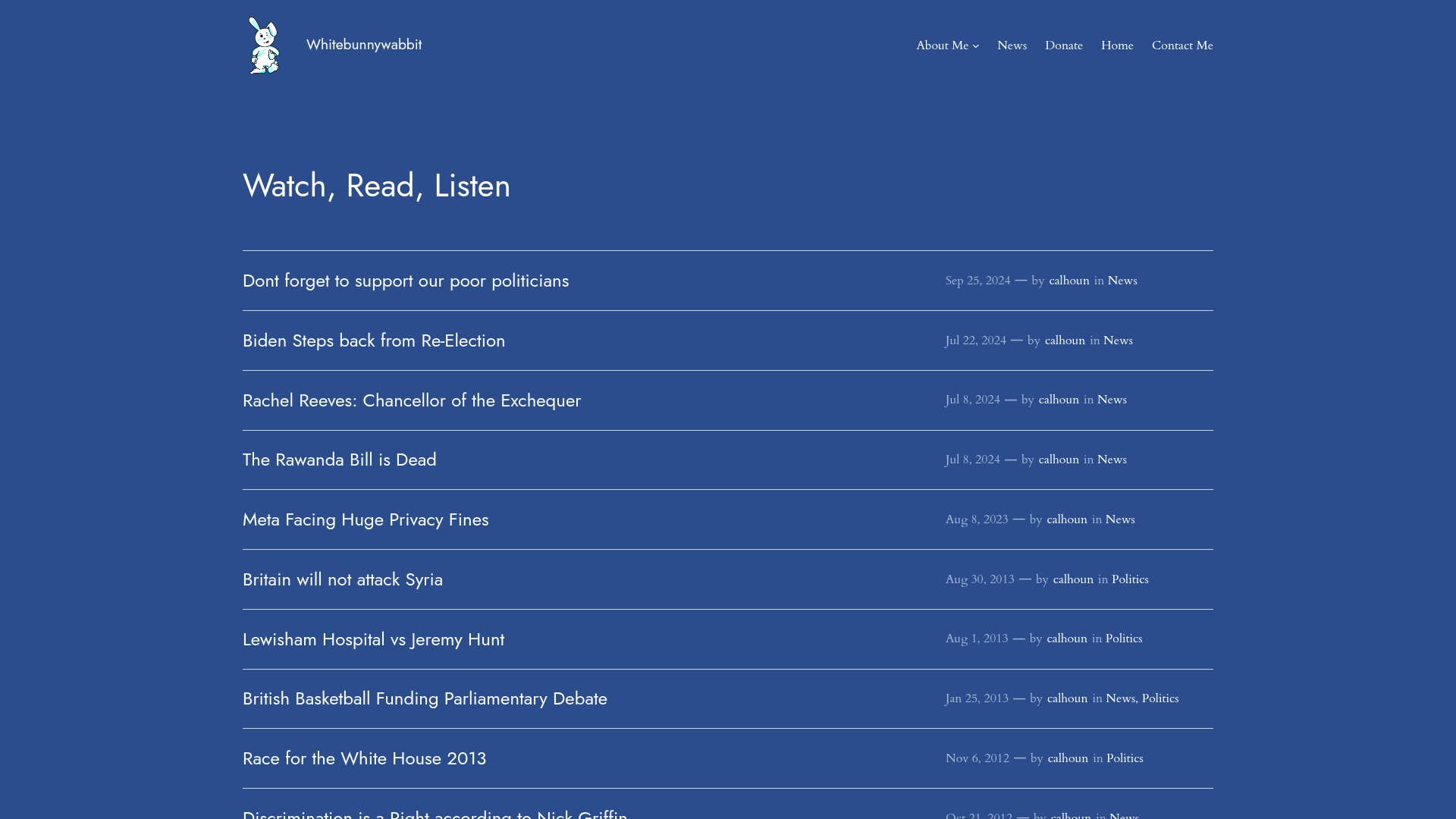
Whitebunnywabbit publishes independent editorial commentary and analysis on UK and global affairs. If you find this kind of media literacy guidance useful, the site’s work on reporter education and civic journalism is a good place to continue reading.
Sources
- Distinguishing opinion from news – KSJ Handbook
- How do you sort fact from opinion? – Poynter (MediaWise)
- Confusion about what’s news and what’s opinion – American Press Institute
- Distinguishing among news, opinion and propaganda – The News Literacy Project
Leave a Reply