
Archive news articles research is the practice of locating, accessing, and critically evaluating historical news content from physical and digital collections for scholarly or personal inquiry. Whether you are a student tracing a political scandal from the 1970s or a researcher mapping public opinion during wartime, the right archive can transform your work. Tools such as ProQuest Historical Newspapers, the Internet Archive, and library catalogues form the backbone of any serious search. This guide covers where to find archived news, how to search effectively, and how to navigate the growing access restrictions that now complicate the field.
What are the main sources for archive news articles research?
The strongest starting point for any researcher is an institutional database. ProQuest Historical Newspapers holds full-image, searchable archives dating back to the 18th century, with access to hundreds of millions of articles. That scale is simply not replicable through free web searches. Most university and public research libraries subscribe to ProQuest, meaning your library card or student login is often the only barrier.
Beyond ProQuest, several other databases serve distinct needs:
- NewspaperARCHIVE.com covers regional and community titles that major databases miss, making it useful for local history research.
- World Newspaper Archive focuses on international titles and is particularly strong for Commonwealth and European press.
- Chronicling America, run by the Library of Congress, provides free access to digitised American newspapers from 1770 to 1963.
- The British Newspaper Archive holds millions of pages from UK titles, with strong coverage from the 19th and early 20th centuries.
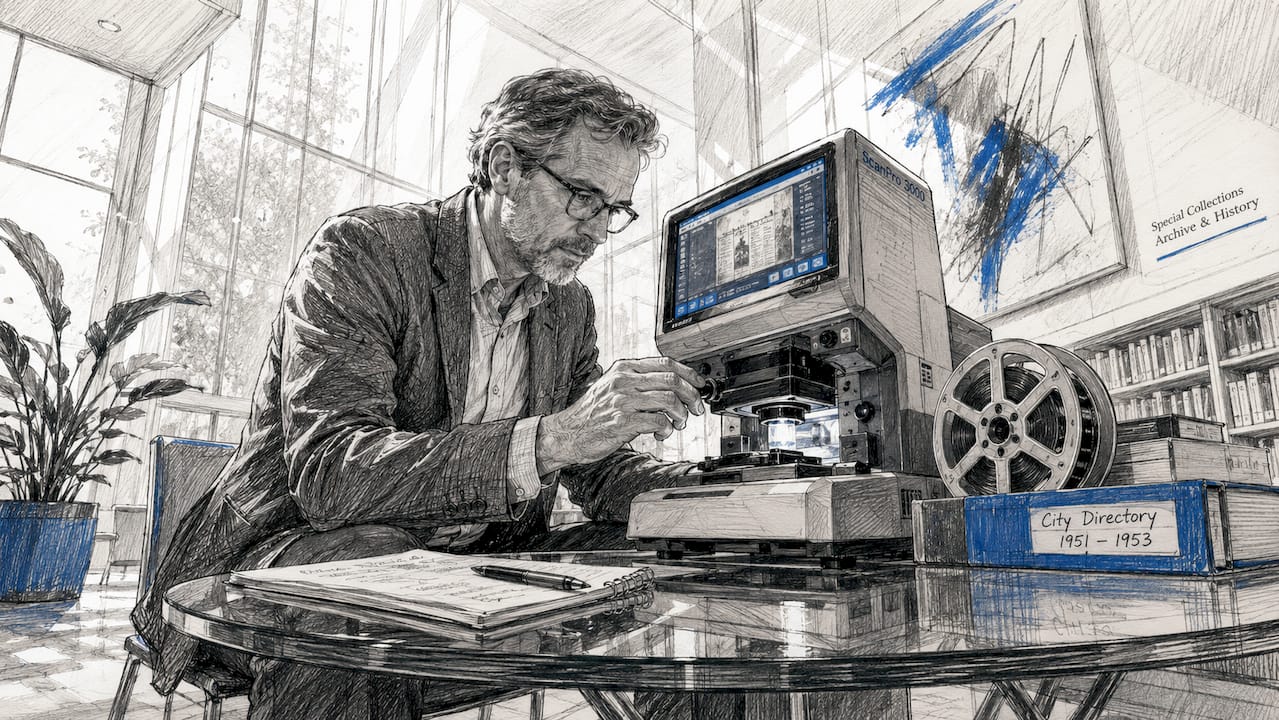
Physical archives remain indispensable for pre-digital material. Many libraries hold microfilm collections covering titles that have never been digitised. Interlibrary loan programmes, such as those offered through the Center for Research Libraries, allow researchers to borrow microfilm reels and physical issues that no online database carries. Institutional membership unlocks extended access to print and microfilm materials that would otherwise be impossible to obtain.
Pro Tip: Before paying for a subscription database, check whether your local university library offers remote access. Many institutions grant alumni and community members free database access with a library card.
| Source | Format | Access method | Date coverage |
|---|---|---|---|
| ProQuest Historical Newspapers | Full-image digital scans | Library subscription | 18th century to present |
| Chronicling America | Digitised scans, full-text search | Free online | 1770–1963 |
| British Newspaper Archive | Digitised scans | Paid subscription or library | 1700s to 20th century |
| NewspaperARCHIVE.com | Digitised scans | Paid subscription | 1700s to present |
| Microfilm collections | Physical reels | Library or interlibrary loan | Varies by title |
How can you search digital and physical news archives efficiently?
Effective searching in a news article database requires more than typing a topic into a search box. Full-text searchable archives such as Chronicling America and ProQuest support Boolean operators. Use AND to narrow results, OR to capture synonyms, and NOT to exclude irrelevant terms. A search for “coal strike AND Wales NOT 1984” will surface earlier disputes without drowning you in results about the miners’ strike.
Date and location filters are equally powerful. Most databases let you restrict results by publication date, county, or city. Applying these filters early prevents you from sifting through thousands of irrelevant results. Metadata fields such as publication name and edition also help when you know which title covered a specific region.
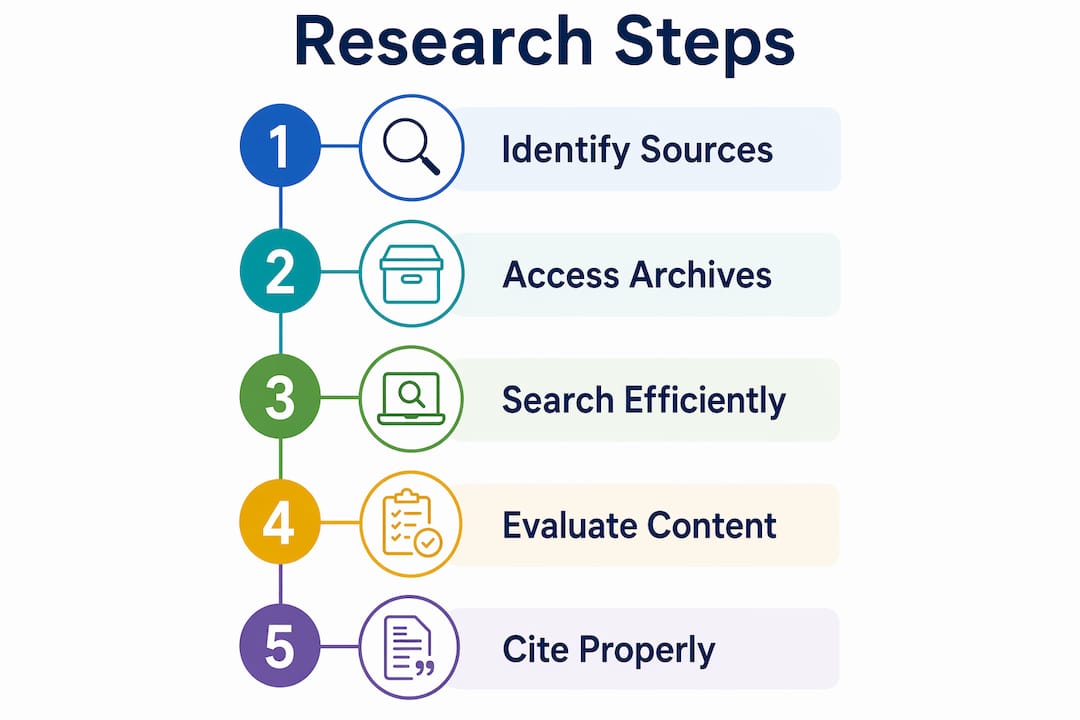
Searching physical collections requires a different approach. Follow these steps when working with microfilm or original newspapers:
- Identify the relevant title and date range before visiting the archive.
- Check the library catalogue for reel numbers and call numbers.
- Request materials in advance, as some collections require 24 to 48 hours’ notice.
- Use a consistent note-taking template recording title, date, page, and column for every article you find.
- Photograph or scan pages rather than transcribing by hand to reduce errors.
Newspaper title changes and mergers are a common trap. A paper may have operated under three different names across 50 years. Library catalogues provide cross-references, but you must search each title iteration separately to avoid missing relevant coverage. Treating each name as a distinct search entry is standard practice among experienced archive researchers.
Pro Tip: Published newspaper indexes, available at many state and national libraries, list articles by subject and date. They do not contain full text, but they pinpoint the exact issue and page you need, saving hours of microfilm scrolling.
What challenges do researchers face when accessing archived news?
Access restrictions are the most pressing obstacle in 2026. Over 340 local news outlets are now blocking the Internet Archive from crawling their content, citing concerns about AI training and copyright. That figure comes from a sample of 382 sites, with 93% based in the United States. The practical consequence is that the Wayback Machine, once a reliable fallback for recent news, now has significant gaps in local and regional coverage.
Incomplete digitisation creates a separate problem. Many titles from the mid-20th century exist only on deteriorating microfilm or in physical bound volumes. Gaps in runs are common, particularly for smaller regional papers. No database can compensate for issues that were never preserved in the first place.
The instability of centralised digital tools compounds the issue. Google News Archive stopped adding content in 2011, and its search features remain limited and unreliable. Researchers who built workflows around it found themselves stranded. Relying on a single centralised archive for long-term research is a structural risk, not just an inconvenience.
“Historians advise researchers to recognise the business and political nature of newspapers, urging critical evaluation of archived news content.” — Florida State University Libraries
Strategies to work around these obstacles include:
- Use library consortiums. Groups such as the Center for Research Libraries pool resources, giving members access to materials no single institution holds.
- Broaden your geographical scope. Significant stories were often syndicated across regional papers. If a local title is unavailable, a neighbouring county’s paper may carry the same report.
- Contact archives directly. Many state and national archives hold uncatalogued or partially digitised collections that do not appear in standard database searches.
- Use multiple platforms. Cross-referencing Chronicling America, ProQuest, and a physical collection reduces the risk of missing key coverage.
What are the best practices for ethical and effective use of archived news?
Historical newspapers reflected political, religious, or industrial agendas rather than modern standards of objectivity. A 19th-century mining town newspaper owned by a colliery company will present labour disputes very differently from an independent urban title. Recognising this bias is not optional. It is the foundation of credible archive journalism research.
Correct citation of archived sources matters for academic integrity and reproducibility. Include the newspaper title, date of publication, edition, page number, and the database or archive where you accessed it. For microfilm sources, note the reel number and the holding institution. Different citation styles, including Chicago, APA, and MLA, have specific formats for newspaper archives. Check the relevant style guide before submitting academic work.
Pro Tip: Triangulate every significant claim across at least three separate titles or archives. A story confirmed in a local paper, a regional competitor, and a national title carries far greater evidential weight than one sourced from a single outlet.
Avoid over-reliance on any single database. ProQuest is excellent but does not hold every title. The British Newspaper Archive covers UK content that ProQuest misses entirely. Using both, alongside Chronicling America for American material, gives you a genuinely broad picture. Copyright and reproduction restrictions also vary by archive and by the age of the material. Check each platform’s terms before reproducing scanned pages in published work or presentations.
The role of anonymous sources in journalism adds another layer of complexity when evaluating historical articles. Many archived reports relied on unnamed informants whose reliability cannot now be verified. Flag these instances in your notes and treat such articles as corroborating evidence rather than primary proof.
Key takeaways
Effective archive news articles research depends on combining institutional databases, physical collections, and critical source evaluation rather than relying on any single tool or platform.
| Point | Details |
|---|---|
| Prioritise institutional databases | ProQuest and the British Newspaper Archive offer depth and reliability that free web archives cannot match. |
| Search all title iterations | Newspaper mergers and name changes require separate searches for each title to avoid missing relevant articles. |
| Account for access restrictions | Over 340 news outlets now block the Internet Archive; use library consortiums and physical collections as alternatives. |
| Evaluate source bias | Historical newspapers carried political and commercial agendas; triangulate across multiple titles before drawing conclusions. |
| Cite archives precisely | Include title, date, page, edition, and the holding archive or database in every citation to support reproducibility. |
What I have learnt from years of researching past news
The single biggest mistake I see researchers make is treating the Internet Archive as a complete record. It never was, and in 2026 it is even less so. The publisher restrictions now limiting archive access have accelerated a shift that was already underway. Researchers who built their workflows around freely available web archives are now scrambling to find alternatives.
My honest view is that institutional library resources have always been the correct foundation for serious archive work. The shift away from centralised digital tools like Google News Archive, which stopped growing in 2011, should have prompted a rethink years ago. Libraries have not disappeared. Their microfilm collections, interlibrary loan networks, and database subscriptions represent decades of preservation work that no tech company has replicated.
The other lesson I keep returning to is the importance of treating newspapers as business artefacts. Every title had owners with interests. Every editor made choices about what to print and what to suppress. A researcher who reads an archived article without asking “who owned this paper and what did they stand to gain?” is missing half the story. That critical instinct is what separates good archive research from simple fact-gathering.
Staying adaptable matters too. Digital tools will continue to change. New databases will launch; others will be discontinued. The researchers who fare best are those with strong relationships with librarians and a working knowledge of physical collections. Those skills do not become obsolete when a platform shuts down.
— John
How Whitebunnywabbit supports your news research
Whitebunnywabbit publishes analysis and commentary that puts archived and current news into context. For researchers and students who want to go deeper, the education resources at Whitebunnywabbit cover research techniques, source evaluation, and media literacy in plain language. The site’s political and news coverage also models how to read journalism critically, which is exactly the skill archive research demands. Visit Whitebunnywabbit to explore articles that connect historical patterns to current events, and to find further guidance on building a reliable research practice.
FAQ
What is the best free database for historical news articles?
Chronicling America, run by the Library of Congress, is the strongest free option for American newspapers from 1770 to 1963. For UK material, some public libraries provide free access to the British Newspaper Archive through their digital lending programmes.
Why is the Internet Archive unreliable for recent news research?
Over 340 local news outlets are now blocking the Internet Archive from accessing their content, citing copyright and AI training concerns. This has created significant gaps in coverage, particularly for regional and local American titles published after 2020.
How do I find archived news articles that have never been digitised?
Contact the holding library or state archive directly and request access to microfilm reels or physical bound volumes. Interlibrary loan programmes, such as those offered through the Center for Research Libraries, allow you to borrow materials from institutions across the country.
How should I cite an archived newspaper article in academic work?
Include the newspaper title, date of publication, edition, page number, and the name of the database or archive where you accessed it. For microfilm sources, add the reel number and the name of the holding institution. Check your required citation style, whether Chicago, APA, or MLA, for the exact format.
How do I account for bias when using historical newspapers?
Treat every archived newspaper as a product of its ownership and era. Cross-reference significant claims across at least three separate titles or archives, and note when a paper had a clear political, religious, or commercial affiliation that may have shaped its coverage.
Leave a Reply