

Most people think media narratives are just stories the news happens to tell. They are not. What is media narrative explained properly is something far more purposeful: a structured construction that shapes what you believe is happening, who is responsible, and what should be done. Every editorial choice, from the headline word selected to the face shown on screen, contributes to a frame that organises reality for the audience. This article breaks down what media narratives are, how they work across political and social issues, and how you can start recognising them in your daily media diet.
Table of Contents
- Key takeaways
- What a media narrative actually is
- How media narratives frame political and social issues
- The strategic purpose and impact of media narratives
- Narrative techniques across different media formats
- How to recognise media narratives in everyday consumption
- My perspective on narrative and democratic life
- Explore further with Whitebunnywabbit
- FAQ
Key takeaways
| Point | Details |
|---|---|
| Narratives are purposeful constructions | Media narratives are not accidental stories; they are built through deliberate choices about selection, ordering, and framing. |
| Framing assigns roles and meaning | Narrative framing turns raw facts into coherent stories that tell audiences who to blame, trust, or support. |
| Different formats, different effects | Print, film, radio, and digital media each use distinct codes and conventions that change how a narrative lands. |
| Narratives can be tracked and measured | Belief arcs allow analysts to chart how audiences shift their views over time in response to narrative exposure. |
| Narrative literacy is a civic skill | Understanding how narratives are built helps you consume political and social media far more critically and accurately. |
What a media narrative actually is
News as narrative, as Encyclopaedia Britannica characterises it, is defined by selection, ordering, and presentation. That is the core of it. A journalist does not simply transcribe events. They choose which protagonist to follow, which conflict to foreground, and where to begin and end the sequence. That set of choices produces meaning.
A media narrative is a structured account that organises raw information into a meaningful story, presenting protagonists undergoing events in sequence. Think of the difference between a traffic report listing road closures and a news piece following a local family whose child cannot reach hospital because of those closures. Same facts. Entirely different narrative. The second version assigns cause, stakes, and emotional weight in a way the first never could.
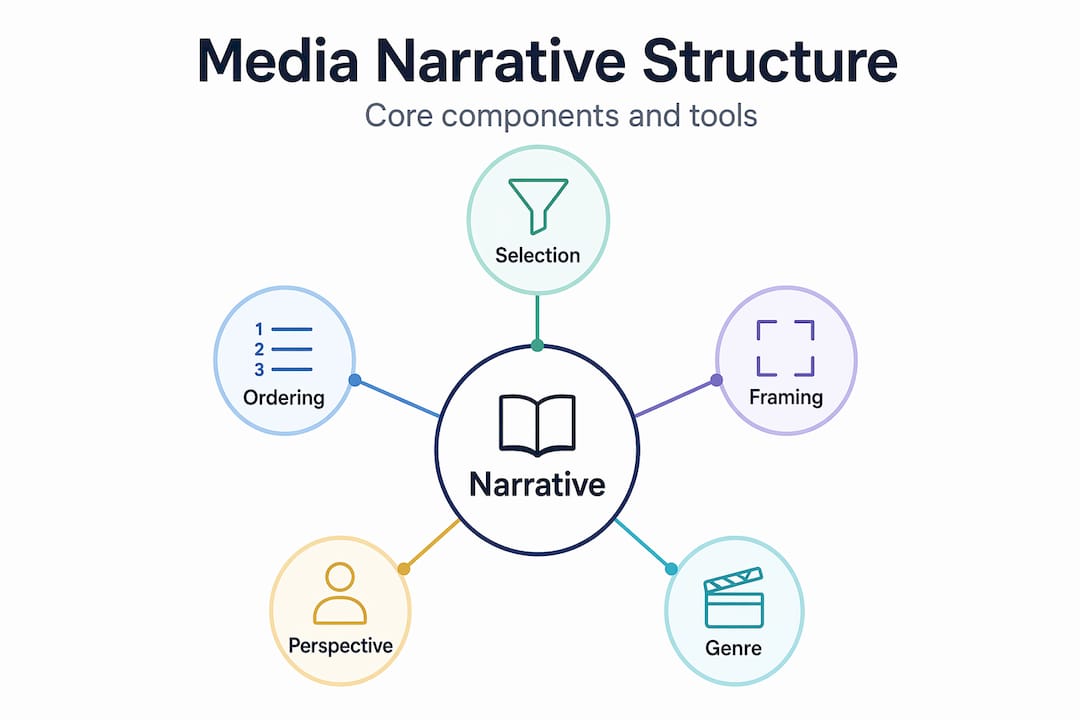
The core structural components of a media narrative are shared with storytelling more broadly: story, plot, character, setting, and theme. But media adds its own layer of technique on top:
- Selection: Which events are included and which are left out.
- Ordering: Whether the story starts at the beginning, the crisis, or the aftermath.
- Framing: The angle from which the story is told, including who is positioned as victim, villain, or hero.
- Pacing: How much time and space is given to each element, which signals relative importance.
Below is a comparison of common narrative structures you will encounter across media formats:
| Structure | Description | Common use |
|---|---|---|
| Three-act | Setup, confrontation, resolution | News packages, documentaries |
| Non-linear | Events presented out of chronological order | Long-form journalism, investigative features |
| In medias res | Begins at the point of crisis | Breaking news, broadcast reports |
| Episodic | Ongoing, serialised chapters | Political campaign coverage, court reporting |
Understanding these structures is the first step toward understanding media narratives in any form.
How media narratives frame political and social issues
Framing is where media narrative gets genuinely powerful. Narrative framing in political communication organises facts into a coherent story that assigns roles, conflicts, and solutions to shape interpretation. It is not about lying. It is about which truth gets emphasised.
Consider two framings of the same policy: “Government cuts welfare spending” versus “Government redirects funds to boost employment programmes.” Both could describe the same budget decision. The first positions the government as taking something away. The second positions it as investing. The facts may be identical. The narrative each creates is not.
Media outlets reinforce, weaken, or replace narratives through editorial choices like headlines, sequencing, and imagery. This is not always a conspiracy. It is often a consequence of editorial culture, commercial incentive, or political alignment that shapes what feels like “normal” framing inside a newsroom.
Ways that narrative framing shapes how you interpret a political or social issue:
- Assigning blame: Who caused the problem and therefore who must fix it.
- Defining the stakes: Whether the issue feels urgent or manageable.
- Selecting the spokesperson: Whose voice carries authority in the story.
- Establishing precedent: Whether the issue is framed as new or part of a long pattern.
- Suggesting solutions: Which outcomes are presented as logical conclusions to the narrative.
Pro Tip: When reading any news piece on a political issue, ask yourself: who is the protagonist, and who is the antagonist? If you can answer that question in under ten seconds, you have just identified the frame.
The strategic purpose and impact of media narratives
Here is the distinction that most media literacy guides miss. A story simply describes events. A narrative deploys those events with intent. Narrative is purposeful, organised intentionally to achieve specific outcomes, whether that is shifting public opinion, forming a market, or changing behaviour.
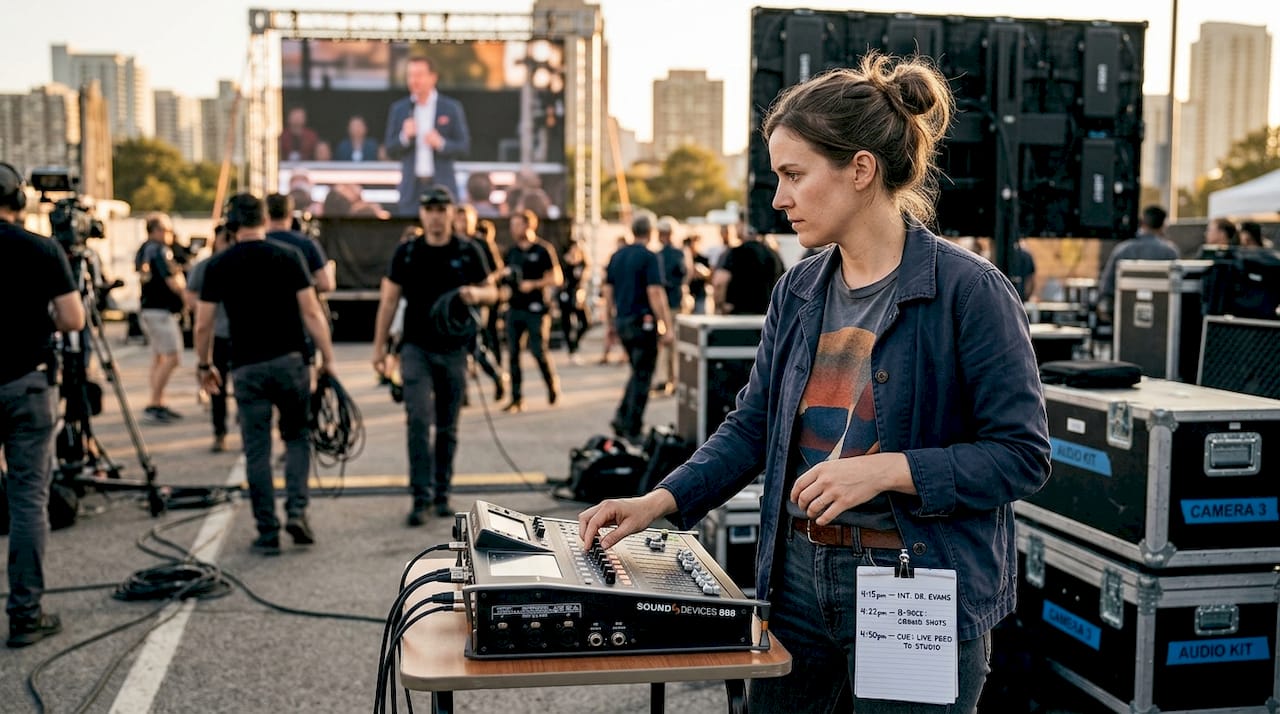
Narrative agents, meaning the editors, producers, politicians, and communications teams who construct and distribute narratives, have objectives. They are not passive conduits for information. They are strategists. Understanding who built a narrative and what they stand to gain from it transforms how you receive that narrative.
This is where the concept of belief arcs becomes relevant. Belief arcs map how people adopt a series of related beliefs over time, allowing narrative strategists to target messaging for incremental belief change. A political campaign, for instance, does not expect a voter to shift from opposition to support overnight. It targets the specific belief stage that voter occupies and nudges them one step forward.
The measurable impact of narrative works through several mechanisms:
- Audience segmentation: Different narrative versions are tailored for different belief stages.
- Repetition and reinforcement: The same narrative frame repeated across multiple outlets normalises it.
- Emotional anchoring: Attaching a narrative to a felt experience makes it far harder to dislodge with facts alone.
Narrative also functions as an operating system for organisations under pressure, embedding values and guiding actions during crises in ways that shape long-term reputation. It is a dynamic system, not a single message.
Pro Tip: Whenever you notice the same story framed identically across multiple outlets simultaneously, ask who benefits from that framing being so consistent. Coincidence is possible. Co-ordination is also possible.
Narrative techniques across different media formats
The medium genuinely changes the narrative. Film and television use image, sound, editing, and performance to establish narrative meaning and emotional impact in ways that printed text simply cannot replicate. A close-up shot of a tearful face during a political speech communicates something that even the most carefully written description does not.
Narrative production choices include focalization (whose perspective you inhabit), sequencing, genre adherence, and technical codes. These are tailored by each medium to construct meaning. A radio documentary creates intimacy through voice, silence, and ambient sound. A viral social media post creates meaning through brevity, image selection, and the cultural context its audience brings to it.
Here is how narrative techniques vary across formats:
| Media format | Key narrative tools | Effect on audience |
|---|---|---|
| Print journalism | Word choice, headline, image caption | Frames interpretation before body is read |
| Television news | Editing rhythm, facial close-ups, music | Creates emotional tone and urgency |
| Radio | Voice quality, pausing, sound design | Builds intimacy and mental imagery |
| Digital and social | Brevity, shareability, algorithmic amplification | Accelerates narrative spread, rewards strong framing |
| Documentary film | Narrative arc across time, interview selection | Deepens belief through immersion and identification |
Different media use distinct codes and conventions that shape how a narrative is experienced. The same political story told as a thirty-second clip, a long-form podcast, and a newspaper front page will produce meaningfully different responses. Recognising the codes of each format is part of understanding media narratives at depth. You can explore how narrative structure in video shapes audience interpretation across professional media contexts for further context on this.
How to recognise media narratives in everyday consumption
Knowing the theory is useful. Applying it daily is what actually changes how you consume media. Here is a practical framework:
- Identify the protagonist. Every news story has one. Who is the story about, and what does that choice tell you about the intended frame?
- Locate the conflict. Every narrative needs a problem. What is being presented as the central conflict, and who is positioned on each side of it?
- Notice what is absent. Narratives are as much about omission as inclusion. What perspective or data point is conspicuously missing?
- Track repetition across outlets. If the same frame appears across multiple independent sources, ask whether that convergence is organic or coordinated.
- Assess the resolution suggested. Every political narrative implies a solution. What action or belief does this story seem to push you toward?
Narrative change work treats narratives as trackable belief arcs, targeting specific audience segments over time. That is the professional framework. You can adapt it informally by keeping a simple running note of how coverage of a specific issue shifts in framing over weeks and months.
Pro Tip: Pick one ongoing political story and follow it across three different outlets for a week. Do not read for facts. Read specifically for the frame: who is the hero, who is the villain, and what solution is implied. The differences will surprise you.
You can find practical media narrative examples illustrated through current affairs coverage in the Whitebunnywabbit news section, which provides a useful ongoing reference for applying these frameworks to real stories.
My perspective on narrative and democratic life
I have spent years reading and writing about politics and current affairs, and the shift I have noticed most sharply is this: the narratives have not become more biased. They have become more deliberate. Twenty years ago, editorial framing was often the product of habit, culture, and assumption. Now it is increasingly the product of professional strategy, data modelling, and audience segmentation.
That shift matters enormously for democratic life. When narratives are engineered with the precision of advertising campaigns, the average citizen is at a structural disadvantage. The tools that narrative agents use to induce belief change are sophisticated. The media literacy education most people receive is not.
What I keep coming back to is that narrative literacy is not a nice-to-have. It is the basic competency required to participate in public life without being constantly manipulated. Journalists structure stories around protagonists to produce meaning, not just deliver facts. That is not a criticism of journalism. It is a structural truth about how narrative works. Understanding it protects you.
I am also increasingly convinced that podcasts and long-form audio, for all their flaws, create a different quality of engagement with narrative than social media does. The ways podcasts inspire audience belief change are worth understanding alongside how broadcast and print media operate. The medium shapes the message in ways that are still being worked out.
— John
Explore further with Whitebunnywabbit
If this article has sharpened your interest in how media narratives shape political reality, Whitebunnywabbit offers an ongoing resource for exactly that kind of thinking.
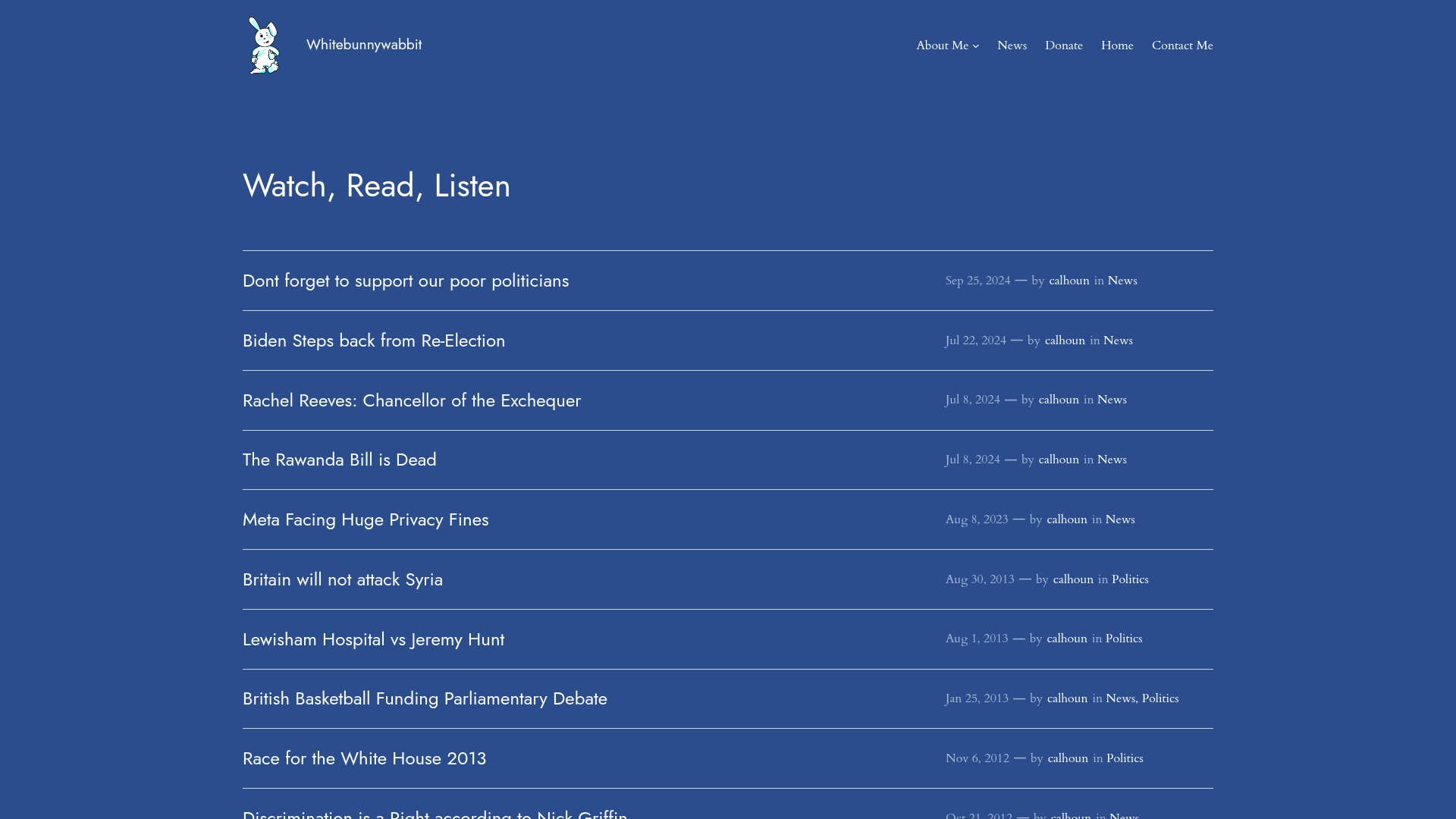
The Whitebunnywabbit platform brings together political commentary, news analysis, and opinion pieces that illustrate media narrative principles in action on current stories. Rather than reading about how framing works in the abstract, you can see it applied to real events across government policy, international affairs, and social debate. For readers who want to build a deeper foundation in media analysis, the media literacy resources section provides structured reading to develop your critical eye further. Understanding media narratives is a skill you build over time, and having quality material to practise on matters.
FAQ
What is a media narrative?
A media narrative is a structured account that organises information into a purposeful story using selection, ordering, framing, and emphasis to shape how an audience understands events. It goes beyond reporting facts to assign meaning, roles, and interpretations.
How does narrative framing affect political reporting?
Narrative framing shapes political reporting by determining which facts are emphasised, who is cast as protagonist or antagonist, and which solutions appear logical. Two outlets covering the same event with different frames can produce opposite interpretations in their audiences.
What is the difference between a story and a narrative?
A story describes events in sequence. A narrative deploys those events intentionally to achieve a specific outcome, such as shifting belief, mobilising action, or forming public opinion. The key distinction is purposeful intent.
What are the main types of media narratives?
Common types include three-act structures used in news packages, non-linear formats in investigative journalism, episodic narratives in ongoing political coverage, and crisis narratives in breaking news. Each type shapes audience expectations and emotional engagement differently.
How can I identify a media narrative in everyday news?
Identify the protagonist, locate the central conflict, note what is absent, and observe what solution the story implies. Tracking the same story across multiple outlets and noting where the frames converge or diverge is one of the most revealing exercises you can do.
Leave a Reply